
Italian culture
Before the Primo: Salumi and the Italian Art of Beginning a Meal
Explore how antipasto opens the Italian table and how salt, air, time, heat, and geography give regional salumi their distinct character.
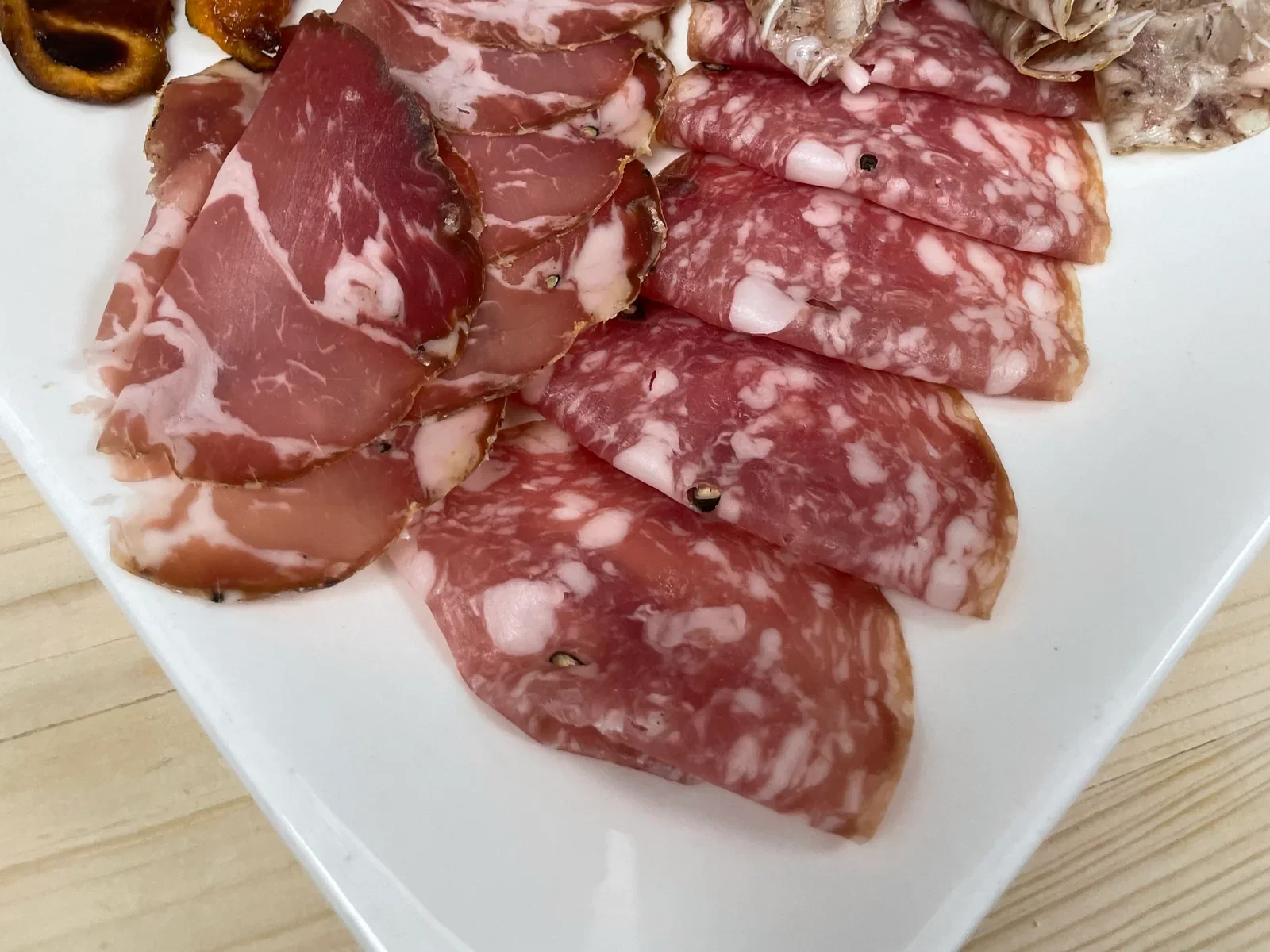
An Italian meal does not always begin with an antipasto. When it does, the point is not to make the first plate the largest one.
Antipasto means what comes before the meal, or more precisely before the courses that form its center. It wakes the appetite through contrast: a salty slice beside sweet fruit, a crisp bread beside something supple, a sharp pickle after a rich bite. It also slows the table down. People reach, share, compare, and begin talking before the primo arrives.
Salumi are especially suited to that role because a thin slice can hold an entire regional story. Salt, air, humidity, time, grinding, stuffing, cooking, and curing all change meat in different ways. The result is not one broad category called “Italian cold cuts,” but a collection of distinct crafts.
Antipasto is a beginning, not a formula
There is no compulsory national antipasto board. Near the sea, the opening may feature marinated fish, shellfish, or vegetables. Elsewhere it might be cheese, olives, mushrooms, fried bites, or bread with a local condiment. What is abundant, preserved, seasonal, or ready to share often determines the plate.
A selection of salumi makes the geography particularly visible. The pale, silky sweetness of a long-cured prosciutto does not resemble the compact leanness of bresaola. Mortadella is cooked and fragrant, with a velvety slice. A coarse salame has a different chew and spice from a finely ground one. Even before tasting, the cut surface reveals how each product was made.
This is why salume should not be translated too narrowly as “sausage.” Some salumi are whole muscles; some are ground and enclosed; some are cooked; others are dried or cured. Smoking is important in certain traditions but absent from many others. Preservation is the shared historical problem, not one shared solution.
Prosciutto: salt, air, and patience
Prosciutto di Parma offers a clear example of how restraint can demand enormous control. The protection consortium describes a process centered on pork, sea salt, and time, with producers working inside a legally defined area in the hills around Parma. The local production rules and climate are treated as part of the product’s identity.
Salt first draws moisture and seasons the meat. Resting and drying continue the transformation gradually. During maturation, texture firms, aromas deepen, and the flavor becomes savory without losing the gentle sweetness for which Parma ham is known.
At the table, slicing matters. A very thin slice warms almost immediately, becoming supple enough for its fat to soften and its aroma to open. Folded loosely rather than pressed flat, it creates alternating layers of meat, air, and delicate richness. A piece of bread or a seasonal fruit can provide contrast, but the prosciutto does not need a complicated disguise.
The famous Parma crown is not simply a decorative brand. It marks a protected name whose rules govern origin, processing, inspection, and maturation. “Made near Parma” and “Prosciutto di Parma” are not automatically the same claim.
Bresaola: the mountain-air expression
Bresaola della Valtellina changes the picture completely. It is made from selected cuts of beef rather than pork and is processed within the province of Sondrio. The protection consortium describes salting with spices and aromatics followed by drying and maturation in Valtellina’s Alpine environment.
The finished slices are lean, deep red, and tender, with a concentrated meat flavor that benefits from brightness. Olive oil, lemon, pepper, greens, or shaved cheese may accompany it, but quantity matters; the condiments should sharpen the bresaola rather than bury its delicate cured aroma.
Its protected geography describes where the transformation occurs, not necessarily where every animal was raised. That distinction is important. Italian geographical indications have specific rules, and each one protects a different relationship among raw material, place, and human knowledge.
Mortadella: a cooked salume with an old reputation
Mortadella Bologna demonstrates why “cured meat” cannot stand in for every salume. Mortadella is cooked. Its finely worked pork mixture is punctuated by small white pieces of fat that remain visible in the slice, creating a texture that is smooth but not uniform.
The European PGI specification describes its bright pink color, velvety cut surface, pearly fat pieces, and fragrant flavor. It also links the product’s reputation to generations of specialist knowledge. The protected production area extends beyond the city of Bologna into several Italian regions, another reminder that a geographical name can represent a regulated historical network rather than a tiny municipal boundary.
Mortadella’s aroma is warm and gently spiced; its texture becomes especially expressive when it is not served refrigerator-cold. Cut thin, it folds softly. Cut into a small cube, it offers a firmer, more substantial bite. The same salume can therefore change character through the knife alone.
Preservation turns necessity into pleasure
The protected salumi above show how one practical need—keeping meat useful over time—produced very different crafts. Salting, stuffing, cooking, drying, and maturation give each cut a distinct future, while regional rules preserve the knowledge behind the finished product.
Necessity did not prevent pleasure; it taught cooks how to find it. Pepper blooms differently in fat than in lean meat. A coarse grind feels rustic and juicy; a thin whole-muscle slice feels almost weightless. Bread absorbs fat and salt, while fruit, pickled vegetables, mustard fruits, or bitter greens reset the palate.
Davanti’s Antipasto di Salumi alla Mantovana offers a way into that northern conversation. The value of the plate is not measured by how many items can be crowded onto it. It comes from choosing contrasting textures and allowing each slice to keep its identity.
How to taste a salumi plate
Begin with the mildest slice and move toward the most seasoned or spicy. Notice texture before reaching for a condiment. Does the meat dissolve, pull, or spring back? Is the aroma milky and sweet, peppery, smoky, fermented, or deeply cured? Then add bread, fruit, or something acidic and see what changes.
Most of all, let the antipasto perform its original work: opening the appetite rather than ending it. A few carefully chosen bites can introduce a landscape, a preservation craft, and the rhythm of the meal still to come.
Continue through the weekend-special archive or explore Davanti’s current menu.
Culinary details reviewed by Oliver Calza, Davanti Co-Founder.