
Italian coastal food
Salt, Sea and Time: Colatura, Bottarga, Baccalà and Italy’s Preserved-Sea Pantry
Discover how Italian coastal communities use salt, drying, fermentation, and sweet-sour marinades to turn the sea’s seasons into enduring flavor.
A spoonful of amber colatura, a shaving of bottarga, a pale piece of baccalà, and a dish of fish in saor do not taste alike. They share an older question: how can the sea’s abundance outlast the day’s catch?
Italian coastal communities answered with salt, air, pressure, fermentation, oil, vinegar, and patient timing. These methods kept food available through travel, lean seasons, and religious fasts. They also created flavors that fresh fish could never produce on its own—deep savor, concentrated sweetness, maritime salinity, and the bright tension of sweet and sour.
Preservation began as practical knowledge. It became a pantry.
Colatura: an amber seasoning from Cetara
Colatura di Alici di Cetara is made from anchovies matured under salt. In the protected Campanian tradition, anchovies caught off the Salerno coast are cleaned, salted, and layered head-to-tail in small wooden barrels called terzigni. A weighted wooden disk presses from above while time and salt draw liquid from the fish.
The liquid is collected, concentrated, and eventually passed back through the layers of anchovies before filtering. What emerges is clear and amber to mahogany in color, with an intense aroma of anchovy and sea air. The current European PDO specification describes its flavor as strong, savory, and notably umami.
That intensity explains why colatura is used in drops and spoonfuls rather than like an ordinary pasta sauce. It can season spaghetti, vegetables, or bread while bringing salinity and fermented depth with very little volume. In Cetara, Regione Campania records its traditional place on Christmas Eve spaghetti and with broccoli and other vegetables.
Colatura is often called a descendant of Roman garum. Ancient Mediterranean cooks certainly made fermented fish sauces, and the comparison is meaningful. A continuous, unchanged recipe from Rome to modern Cetara is harder to prove. It is more accurate to see colatura as a living local craft that belongs to the Mediterranean’s much older habit of transforming fish with salt.
Bottarga: the sea concentrated into a shaving
Bottarga begins with roe rather than flesh. Sardegna Agricoltura describes Sardinian mullet bottarga as the intact roe sacs of grey mullet, carefully removed, salted, pressed, and dried. Their color can move from golden amber to a deeper bronze depending on the fish and maturation.
The whole piece looks modest, but cutting it releases an aroma that is unmistakably marine. Thin slices can be served as an antipasto; grated bottarga melts its flavor across warm pasta. It brings salt, but also a rounded, egg-rich savor and a slightly waxy texture that distinguishes it from an anchovy.
Sardinia’s coastal lagoons are central to this story. Mullet live well in brackish environments, and lagoon fishing created knowledge about seasons, maturity, and careful handling. Preserving the roe allowed a brief biological moment to become a pantry ingredient with a much longer life.
Bottarga appears elsewhere around the Mediterranean and can also be made from tuna roe. The word therefore identifies a method and family of products, not one uniform flavor. Mullet bottarga and tuna bottarga differ in size, color, intensity, and texture.
Baccalà and stoccafisso: two journeys of cod
Cod reached Italian kitchens from colder northern waters through long-distance trade. Drying or salting made that journey possible, and Italian cooks turned an imported preserved fish into deeply local dishes.
Treccani distinguishes baccalà, cod preserved with salt, from stoccafisso, cod dried in the open air without salt. Regional language complicates that tidy distinction: Regione Veneto notes that what the rest of Italy calls stoccafisso is called bacalà in Veneto. The name on a dish may preserve local speech as faithfully as it describes an ingredient.
Italia.it describes Venetian baccalà mantecato as a cream made from soaked stockfish and oil, served on warm bread or fried polenta. The transformation is almost surprising: the preserved fish becomes a pale, airy spread, its maritime savor carried by a smooth texture rather than buried beneath a heavy sauce.
Saor: preservation through sweet and sour
Venice offers another answer in sarde in saor. Sardines are fried and layered with onions cooked with vinegar. Regione Veneto describes the method as a way fishermen kept food aboard for longer periods; raisins and pine nuts became characteristic additions in later versions.
Vinegar supplies acidity, onion brings sweetness, and resting allows the layers to exchange flavor. The fish softens slightly as the condiment settles around it. A preparation born from keeping food becomes better when given time before serving.
Saor also reveals how preservation changes appetite. Fried fish alone is rich and immediate. Vinegar lifts it; onion rounds it; dried fruit, where used, stretches the contrast. The dish moves among salt, sweetness, acidity, and oil instead of staying on a single strong note.
Four methods, four flavors
Colatura ferments anchovies under salt and captures their liquid. Bottarga salts and dries roe. Baccalà and stoccafisso preserve cod for long travel through salting or air-drying. Saor surrounds cooked fish with an acidic onion condiment. Calling all four “preserved seafood” is correct, but stopping there misses the ingenuity.
Each technique alters texture and aroma differently. Fermentation creates free-flowing savor. Drying concentrates. Rehydration gives firmness back to cod. Vinegar makes richness feel brighter. The preserved ingredient is not merely a substitute for fresh fish; it has become something with its own culinary purpose.
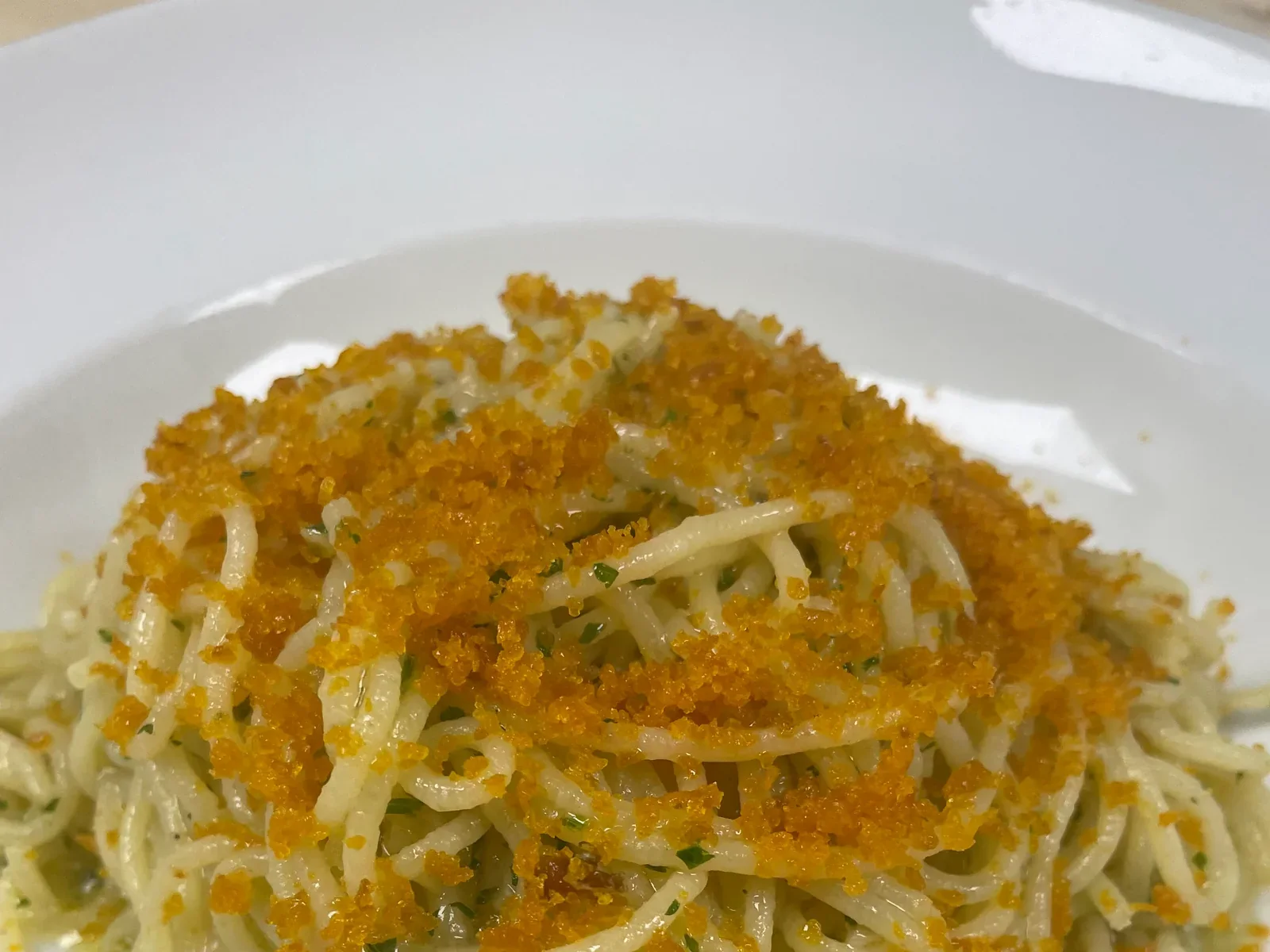
Davanti’s Spaghetti con Colatura di Alici e Bottarga brings two of these traditions to one plate. The colatura moves through the pasta as a liquid seasoning, while grated bottarga remains visible and aromatic on the surface. Both come from the sea, but each reaches the diner through a different conversation with salt and time.
Explore more coastal traditions in the specials archive, or see Davanti’s current offerings on the menu.
Culinary details reviewed by Oliver Calza, Davanti Co-Founder.