
Sicilian food
Cannoli: Sicily’s Lesson in Texture, Timing, and Ricotta
How Sicily’s celebrated pastry balances a crisp shell, creamy ricotta, regional decoration, holiday tradition, and perfect timing.
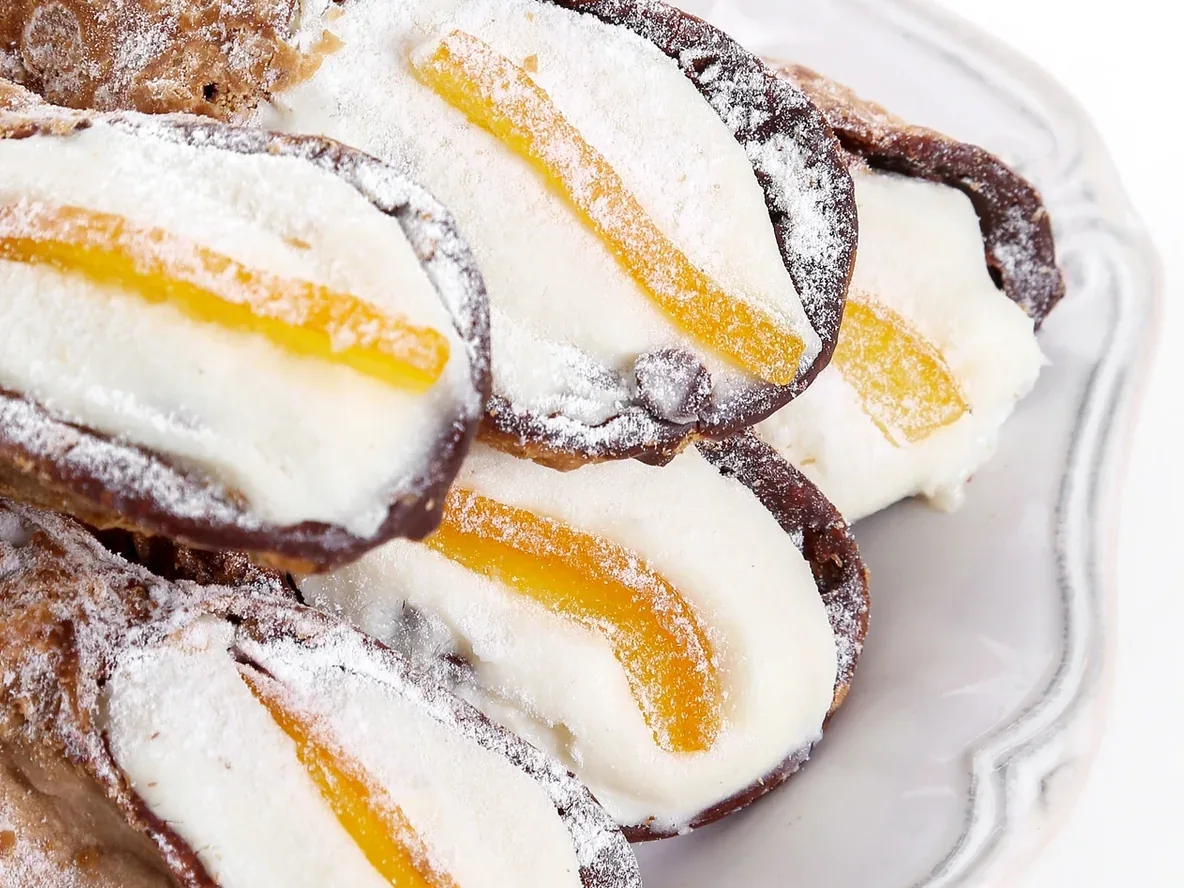
A cannolo makes its argument through contrast. The shell should break with a light crack; the filling should answer with cool creaminess. One is fried and fragile; the other soft and rich. Bring them together at the right moment and a short ingredient list becomes one of Sicily’s most recognizable pleasures.
That timing matters: a cannolo’s character depends on when its two parts meet.
The shell is more than a container
Sicily’s official register of traditional agricultural food products describes a cylindrical fried shell, or cialda. In one registered tradition from the Trapani area, the dough was originally wrapped around a piece of river cane before frying. The modern pastry keeps that hollow shape even when metal forms replace the cane.
The shell’s blistered surface promises brittleness before the first bite, then splinters into crisp flakes rather than bending like cake. Without that dry crunch, the filling would lose the contrast that makes a cannolo complete.
Even the name carries a memory of the form. The Accademia Italiana della Cucina connects cannolo to the river cane around which the dough was once rolled. A practical pastry tool left its mark on the language.
Ricotta places the pastry in Sicily
Italy’s national tourism portal places cannoli beside cassata among the Sicilian sweets that showcase local ricotta. In the regional register, both the Trapani-area cannolo and the traditional cannolo of Piana degli Albanesi and Santa Cristina Gela use sheep’s-milk ricotta. Fresh ricotta gives the interior its gentle dairy character and enveloping texture, a calm counterpoint to the fried shell.
The register records distinct local preparations rather than one compulsory island-wide formula. Some versions add candied fruit or dark chocolate; some finish with powdered sugar. The registered Arbëreshë tradition of Piana degli Albanesi and Santa Cristina Gela describes its own filling and method. Across Sicily, size, shell color, sweetness, and decoration can change from one pastry town to another.
Those differences are not flaws in the tradition. They are the tradition: a shared idea expressed through local ingredients, habits, and pastry-shop signatures.
From feast days to the everyday pastry case
Cannoli are now enjoyed throughout the year, but regional records preserve their connection to celebration. The Trapani-area entry describes the cannolo as a homemade sweet in agro-pastoral families during Carnival and Easter. Documentation for the Arbëreshë communities of Piana degli Albanesi and Santa Cristina Gela places cannoli on Easter and Christmas tables by the late nineteenth century.
That history helps explain the pastry’s festive personality. A cannolo is generous, decorative, and slightly theatrical. It arrives dusted, garnished, or filled to the edges—not an everyday-looking biscuit, but a dessert made to mark abundance and company. As pastry shops made it available beyond the holiday calendar, the sense of occasion remained.
Why filling at the last minute matters
The clearest lesson in the regional register is also the most useful. In the Piana degli Albanesi tradition, the filling is added by hand only before serving so the shell does not lose its crispness.
The reason is simple: moisture travels. Once the creamy center touches the fried pastry, the shell begins to soften. Filling ahead may be convenient, but time gradually erases the contrast the pastry was designed to deliver. The best cannolo therefore contains a tiny bit of choreography—shells ready, filling ready, assembly close to the moment of eating.
Decoration follows the same regional freedom. Chocolate, candied fruit, nuts, or a veil of sugar may frame the ends, but they should support the central exchange between crisp shell and creamy center rather than distract from it.
A history best told with humility
Colorful origin stories place the first cannoli in medieval Caltanissetta. One legend credits cooks in an emir’s court; another moves the invention to a convent kitchen and Carnival celebration. These tales connect the pastry to real layers of Sicilian history, including centuries of cultural exchange, but they are not settled documentary proof. Even the Accademia’s account describes the early history as a landscape of myths, legends, and hypotheses.
What can be said with confidence is more interesting than a single dramatic birthplace: cannoli became part of several local traditions, carried holiday meaning, and evolved into a year-round emblem of Sicilian pastry. The island’s history is visible not in one tidy invention story, but in the variations that communities continue to recognize as their own.
Explore our current offerings on the menu, or continue through the weekend-special archive to see more of Italy through Chef Roberto’s cooking.
Culinary details reviewed by Oliver Calza, Davanti Co-Founder.