
Italian regions
Ragù Beyond Bolognese: Italy’s Regional Tradition of Slow-Cooked Sauces
From Bologna’s finely minced sauce to Naples’s long-cooked meat ragù, explore how local ingredients and family customs shape ragù across Italy.
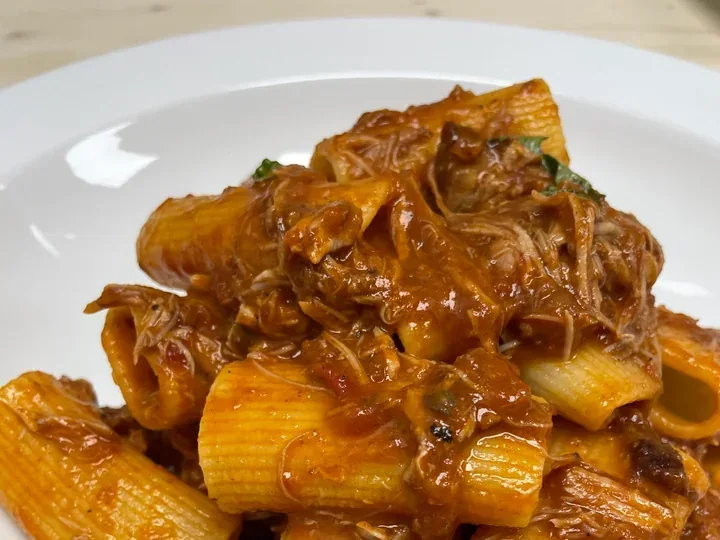
Say ragù outside Italy and many people picture one sauce: a tomato-rich Bolognese spooned over spaghetti. In Italy, the word is broader. Ragù is better understood as a family of slowly developed sauces whose meat, cooking liquid, aromatics, and pasta pairing change from place to place. Bologna offers one celebrated expression, but it is a beginning—not a definition of every ragù.
One word, many local answers
Treccani traces ragù to the French ragoût, a word connected with stimulating the appetite. Once absorbed into Italian cooking, the term took on regional lives of its own. The shared idea is usually time: ingredients are browned, softened, moistened, and cooked until their flavors become inseparable. What goes into the pot is not fixed nationally.
That distinction matters because Italian cooking developed through towns, provinces, and households long before a single national cuisine was imagined. A ragù can reveal what animals were raised nearby, which vegetables formed the local soffritto, whether fresh egg pasta or dried durum-wheat pasta dominated, and how a family organized a long meal.
Bologna: finely minced and carefully balanced
The Accademia Italiana della Cucina updated its reference recipe for ragù alla bolognese in 2023 and deposited it with the Bologna Chamber of Commerce. Its formula uses coarsely ground beef, fresh pork pancetta, onion, carrot, celery, wine, a restrained amount of tomato, and optional milk. The result is a meat-led sauce, not simply tomato sauce with ground beef stirred into it.
In Bologna, ragù is closely associated with tagliatelle and with layered lasagna. That pairing is practical as well as traditional: broad egg pasta gives the finely textured sauce room to cling. The registered recipe is a useful landmark, but it does not erase household differences; even within Emilia-Romagna, cooks make choices shaped by memory, availability, and taste.
Naples: the sauce and the meat share the table
Neapolitan ragù takes a visibly different path. Regione Campania describes large pieces of beef and pork—often including tracchie, or pork ribs—cooking for a long time in tomato sauce. The sauce dresses the pasta, while the meat can be served separately. One pot can therefore help structure more than one course.
Davanti’s archive shows that idea in Paccheri al Sugo di Costine alla Napoletana: pork ribs, Italian tomatoes, onion, and red wine create a sauce with deep savor, mellow sweetness, and bright acidity. Paccheri are not the only possible partner, but their wide tubes make the richness especially tangible.
Ragù bianco is not one recipe
Bianco usually signals that tomato is not the sauce’s defining base. It does not identify one universal white ragù. A cook might build depth with veal, pork, rabbit, or game; wine and broth can provide moisture while aromatics supply sweetness and fragrance.
Compare Davanti’s Garganelli al Ragù Bianco di Vitello, where ridged pasta catches veal, wine, vegetables, and peas, with Tagliatelle al Ragù Bianco di Cinta Senese, built around a historic Tuscan pig breed. The technique creates a family resemblance; the ingredients give each sauce its address.
Other regional inspirations widen the picture further. Davanti’s Casarecce con Ragù alla Barese brings beef, pork, lamb, tomato, and onion to twisted pasta, echoing Puglia’s tradition of connecting pasta and a long-cooked meat sauce at the Sunday table.
Why ragù belongs to unhurried meals
In many families, ragù is connected with Sunday lunch because its long cooking rewards a day with fewer deadlines. The pot perfumes the house, pasta becomes a first course, and—in preparations such as the Neapolitan style—the braised meat can follow. Emilia-Romagna’s tourism authority likewise describes tagliatelle al ragù as especially loved for Sunday meals with family or friends.
That rhythm is familiar, not universal. Italy contains many Sunday tables, including seafood, broth, roast meats, baked pasta, and meals that change with season and circumstance. Ragù’s cultural importance comes not from everyone cooking the same sauce, but from the way patient cooking turns local ingredients into a reason to gather.
The next time a menu says ragù, read the rest of the name. The meat, town, pasta shape, or word bianco is telling you where the story begins.
Culinary details reviewed by Oliver Calza, Davanti Co-Founder.