Italian food
Ravioli, Tortellini, Agnolotti & Casoncelli: A Guide to Italy’s Filled Pasta
A regional guide to ravioli, tortellini, agnolotti and casoncelli—how names, shapes, fillings and serving traditions change across Italy.
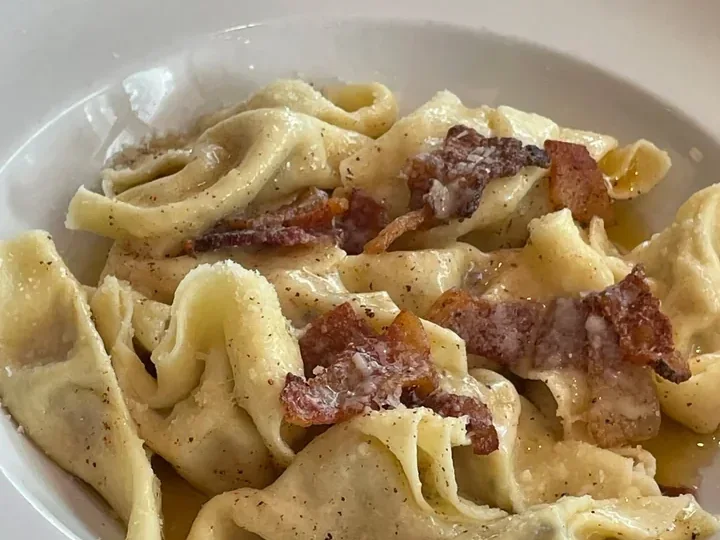
Italian filled pasta is not one uniform category. Ravioli, tortellini, agnolotti, and casoncelli all wrap a filling in fresh dough, yet their names, shapes, fillings, and ways of serving them belong to particular regions and communities.
Move from one province to the next and the same basic idea can acquire a different fold, size, broth, sauce, and place in family tradition. Shape is a useful clue, but geography and local practice complete the story.
That variation is the useful starting point. Ravioli, tortellini, agnolotti, and casoncelli are not merely interchangeable packets of pasta, but neither do their names obey one rigid rule everywhere in Italy. Each belongs to particular communities and habits. The best way to understand them is to ask where a pasta is made, what goes inside it, and how local cooks choose to serve it.
Ravioli: a familiar name with many local expressions
“Ravioli” is the name many diners know first, yet it covers an especially broad range of preparations. The dough may be cut into squares, circles, half-moons, or other shapes, while fillings can move from cheese and greens to braised meat, seafood, or seasonal vegetables. What matters is not a universal filling but the relationship among the pasta, its contents, and its finishing sauce.
Davanti’s archive makes that variety visible. Ravioli Capresi brings together caciotta, ricotta, basil, and marinara, while other Italian ravioli traditions move toward meat, seafood, or seasonal vegetables. The name alone never tells the whole story.
Tortellini: a small shape with a strong Emilian identity
Tortellini are closely associated with Emilia, especially Modena and Bologna. VisitModena describes a sheet of egg pasta cut into small squares, folded around a filling, and closed around a finger to make the recognizable ring. Its recipe combines pork, prosciutto, mortadella, Parmigiano, egg, and nutmeg. Modena’s civic guide notes that tradition calls for cooking and serving the pasta in meat broth.
That broth is more than a neutral setting. It keeps the small pasta tender, carries the aromas of the filling, and makes tortellini particularly suited to celebratory and family tables. Davanti’s Tortellini Modenesi offers another look at the format through ingredients documented by Chef Roberto: Parmigiano, prosciutto, butter, beef, and pork.
Agnolotti and the meaning of a pinch
Agnolotti belong especially to Piedmont, although neighboring Lombardy has traditions of its own. In the Langhe and Monferrato, agnolotti del plin take their name from the small pinch—plin in local speech—used to seal the thin sheet of pasta around its filling. The regional tourism authority notes that this hand gesture produces the pasta’s small, slightly irregular form.
There is also a memorable serving tradition: agnolotti were sometimes cooked in broth, drained, and presented al tovagliolo on a linen napkin, without sauce, so the pasta and filling remained the focus. At Davanti, Ravioli del Plin is finished with its brasato sauce, while Agnolotti alla Pavese brings braised beef cheeks, vegetables, red wine, and meat gravy to the table.
Casoncelli: a Brescian lesson in resourcefulness
Casoncelli are deeply connected to Lombardy and take several local forms. The Brescian preparation documented in Davanti’s archive uses fresh pasta filled with bread, Parmigiano, garlic, and parsley, then finishes it with butter, Parma prosciutto, and sage. Bread in the filling adds body, while butter carries the piney aroma of sage and the prosciutto contributes cured savor.
Casoncelli alla Bresciana is especially meaningful at Davanti because Chef Roberto comes from Brescia province. It also illustrates how a regional pasta can preserve practical kitchen knowledge: familiar pantry ingredients are folded into something generous, distinctive, and worthy of a place at the table.
Learn the place before memorizing the shape
Filled pasta rewards curiosity more than classification. A fold may suggest where a dish comes from, but the filling, sauce, season, and local name complete the picture. Tortellini in broth, agnolotti closed with a plin, and Brescian casoncelli finished with butter and sage each express a different relationship between craft and place.
That is why Italy has no need for one definitive stuffed-pasta chart. The differences are not inconsistencies to correct; they are evidence of living regional food cultures. Begin with the name, then follow it to the town, the family table, and the ingredients inside.
Continue with our look at fresh pasta shaped through bronze dies, browse the current Davanti menu, or order directly from the restaurant.
Culinary details reviewed by Oliver Calza, Davanti Co-Founder.