
Italian ingredients
How to Read an Italian Olive Oil Label: Category, Origin, Harvest, and Storage
Learn what extra virgin, origin, harvest year, cold extraction, PDO, and PGI mean on an Italian olive oil label—and what the bottle still cannot tell you.
An olive oil label can look like a landscape painting crowded with promises: extra virgin, cold extracted, a named estate, an Italian flag, perhaps a harvest date. Some phrases have precise legal meaning. Others are branding. Reading the bottle well begins by separating the two.
The simplest order is category, origin, date, certification, then storage. No single line tells the whole story, but those five checks turn the label into useful evidence.
“Extra virgin” is a regulated category
Under European Union rules, extra-virgin olive oil is not merely an enthusiastic description. It is the highest grade within the virgin-oil categories. Virgin oils are obtained from olives by mechanical or other physical means under conditions that do not alter the oil, without treatments beyond steps such as washing, decanting, centrifuging, and filtering.
To qualify as extra virgin, an oil must meet both chemical and sensory standards. The European Commission summarizes two familiar thresholds: free acidity cannot exceed 0.8 percent, and an approved sensory assessment must find fruitiness and no defects. Virgin olive oil permits a higher acidity limit and a low level of sensory defects. Lampante virgin oil is not sold directly at retail; it is destined for refining or industrial use.
Free acidity is a laboratory measurement expressed as oleic acid. It is not a sourness score that a diner can read directly from flavor, and a very low number alone does not describe aroma, balance, freshness, or whether a particular oil suits a dish.
“Olive oil” without “virgin” names a different category
On an EU label, “olive oil composed of refined olive oils and virgin olive oils” identifies a blend of refined oil with virgin or extra-virgin oil. Olive-pomace oil begins with oil recovered from the paste left after the first extraction and follows its own refining and blending rules.
These are lawful categories, not secret counterfeits. The important point is that they are not synonyms for extra virgin. Read the complete sales designation rather than stopping at the largest word on the front.
Origin is about olives and milling, not graphic design
Italian colors, a Tuscan farmhouse, or an Italian-sounding brand name do not establish where the olives grew. For extra-virgin and virgin oils sold under EU rules, the origin statement is the more meaningful line.
If olives were harvested in one country and milled in another, the regulation requires wording that distinguishes the place of extraction from the place of harvest. That is why “product of Italy,” “bottled in Italy,” and an origin statement tied to both olives and mill should not be treated as equivalent claims.
A protected geographical name adds another layer. PDO generally links all defined production stages to the protected area; PGI requires a documented geographical connection under that product’s registered specification. The EU emblem and the complete registered name matter more than a loose regional reference.
Harvest year and best-before date answer different questions
A best-before date is a durability statement. A harvest year tells when the olives for the oil were gathered and extracted. EU rules reserve a harvest-year indication for extra-virgin and virgin oils, and it can appear only when 100 percent of the container comes from that harvest.
The harvest statement is optional in many circumstances, so its absence is not proof of a defective oil. When it is present, it gives a useful time reference. Compare it with the best-before date, bottle size, and how quickly you are likely to use the oil after opening.
Olive oil does not improve indefinitely in the bottle. Fresh aromas gradually diminish as the oil encounters oxygen, heat, and light. Buying a practical size and using it steadily is often more sensible than saving an open bottle for a distant special occasion.
“Cold extraction” has a narrow meaning
The phrase “cold extraction” may appear on extra-virgin or virgin oil produced below 27°C by percolation or centrifugation. “First cold pressing” is reserved for oil produced below the same temperature by a first mechanical pressing using a traditional hydraulic-press system.
These terms describe an extraction condition. They do not replace the category tests, origin statement, or sensory life of the oil. Modern centrifugation can properly carry “cold extraction”; “first press” is not a universal synonym for excellence.
EU rules also restrict optional flavor words such as fruity, bitter, and pungent to defined sensory assessments for virgin oils. When those words appear within the regulated system, they should reflect a tasting method rather than free-form poetry.
Packaging protects; it does not certify flavor
Light and heat accelerate deterioration. The International Olive Council recommends keeping olive oil away from excessive heat, air, humidity, and especially light. A dark bottle or tin can help, but packaging cannot rescue oil that was poorly made or stored, and a clear bottle does not by itself reveal what the oil tastes like today.
At home, close the container promptly and keep it away from the stove and sunny windows. Then smell and taste it. Extra-virgin oils can legitimately range from delicate and ripe-fruited to intensely green, bitter, and peppery. Color is not a reliable quality grade.
A five-line bottle check
Before choosing, find these five pieces of information:
- Category: Does the full label say extra virgin, virgin, a refined-and-virgin blend, or olive-pomace oil?
- Origin: Where were the olives harvested, and where was the oil extracted?
- Time: Is there a harvest year, and what is the best-before date?
- Protection: If the bottle claims PDO or PGI status, are the complete registered name and EU emblem present?
- Care: Is the container intact and protected from strong light and heat?
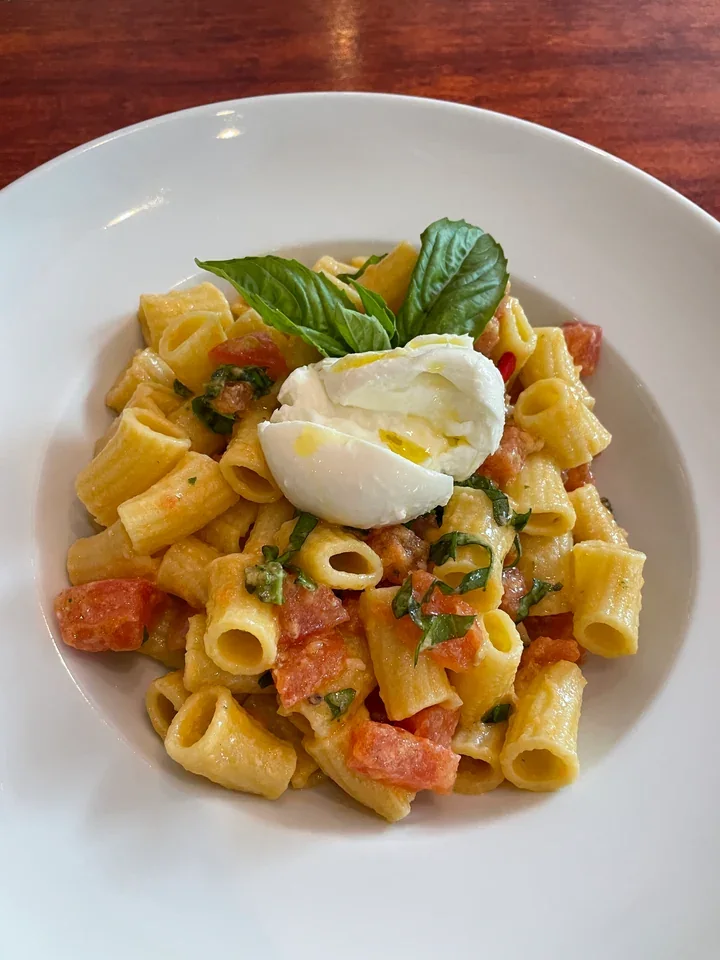
Davanti’s archive documents extra-virgin olive oil in dishes including Crudaiola alla Napoletana, the plate shown above. That record supports the image and link; it does not identify a current bottle, cultivar, harvest, or producer. For what is being served now, consult the current menu and ask the restaurant directly.
The label gets you to the right category and origin. The final judgment still happens when the oil meets the food.
Culinary details reviewed by Oliver Calza, Davanti Co-Founder.