Italian ingredients
La Grande Ruota Flour from Brescia
Why Davanti chooses flour from a family mill near Brescia, and how grain, milling, sifting, time, and technique shape the doughs we make.
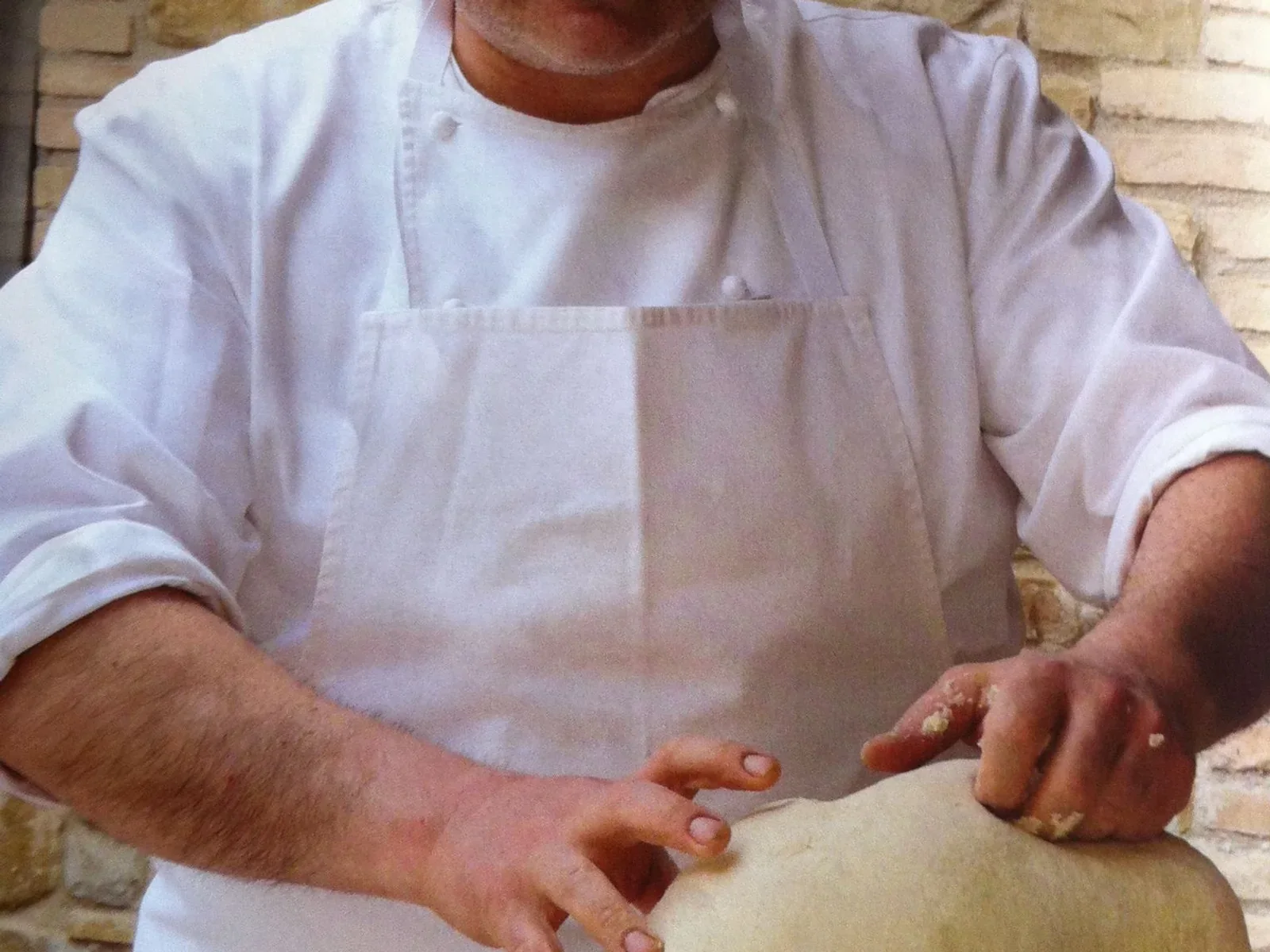
Flour is the ingredient most diners never see. It arrives at the table transformed: blistered into a crisp crust, stretched into a ribbon of pasta, folded around a filling, or baked until its surface turns deeply golden. By then, the powder that began the process has disappeared into texture.
That invisibility can make flour seem interchangeable. It is not.
At Davanti, we use flour from La Grande Ruota, a family-run mill whose roots reach back to 1853. The mill is in Dello, in the province of Brescia—the part of northern Italy Chef Roberto Crescini calls home. That connection is one reason this ingredient means more to us than a technical specification on a bag. It connects our Houston kitchen to a Brescian milling tradition and a way of thinking about food rooted in place.
A mill that began with polenta
La Grande Ruota’s story begins with corn rather than pizza or pasta. The company identifies itself as a Brescian mill and polenta producer operating since 1853, with the milling craft passed through the same family.
That beginning makes sense in Lombardy. After corn arrived in Europe from the Americas, polenta became deeply woven into the cooking of northern Italy. It was practical, sustaining food, but never only that. Across the north, local corn varieties, grinding sizes, colors, cooking methods, and accompaniments turned a simple grain into many regional traditions.
The mill’s original work therefore belonged to the everyday table: selecting corn, grinding it, and giving families the raw material for a dish that could accompany mushrooms, cheese, lake fish, sausages, or a long-cooked stew. Its present catalog is much broader, with wheat, durum wheat, spelt, rye, buckwheat, and blends intended for different kinds of dough. The old polenta mill did not abandon its identity; it let that identity grow.
La Grande Ruota describes agronomist oversight in its fields, internal checks from incoming grain to finished product, and traceability through the supply chain. For its corn, the company also says drying and storage take place at its own center. Those details matter because flour begins before the millstone. Variety, soil, weather, harvest, storage, and cleaning have already influenced the grain by the time a miller decides how to grind it.
What happens between two stones
La Grande Ruota describes a natural-stone system built around two superimposed millstones. Grain passes between them at a relatively slow speed and then moves to a sieve called a buratto. The stones reduce the grain; the buratto separates and sorts what the stones have produced.
That second step is easy to overlook. Milling does not end when a kernel becomes powder. The miller also decides how much of the grain’s outer layers will remain and how finely the flour will be sifted. Progressive sifting can produce wholemeal flour as well as types 2, 1, and 0. “Stone-ground” is therefore not one flavor, one color, or one fixed level of refinement. It describes part of a process whose final result still depends on the grain and the choices made after grinding.
The language contains a delightful clue to how important that work once was. The Accademia della Crusca made the frullone—a sifter used to separate flour from bran—its central symbol; Treccani notes that this tool is also called a buratto. The academicians imagined their linguistic work as a similar act of sifting. Even a dictionary can carry the memory of a mill.
What 00, 0, 1, and 2 really tell us
Italian flour numbers are often treated like a quality ladder. They are not. Type 00 is generally the most highly refined, but “more refined” does not mean inherently better, stronger, or necessarily finer in particle size.
Under Italian classifications for soft-wheat flour, the numbers principally describe degrees of refinement through measures that include ash—the mineral residue left after a controlled laboratory burn—and related composition requirements. Type 00 is highly refined. Types 1 and 2 retain more of the grain’s outer portions, while wholemeal flour includes still more of the complete kernel.
The number does not tell a cook everything the dough needs to know. It does not by itself state how much water the flour will absorb, how strong or extensible a dough will become, how long it should rest, or what aroma it will develop. Two flours with the same type number can behave differently because the wheat, protein characteristics, milling, storage, and intended use differ.
Nor is a darker flour automatically right for every preparation. A tender filled pasta, an airy pinsa, a loaf, and a crisp pastry ask different things of their dough. The useful question is not “Which number wins?” It is “What should this flour help the cook make?”
Flour is an ingredient—and a relationship
When flour meets water, proteins hydrate and begin forming the network that gives a wheat dough cohesion. Mixing develops it. Rest changes it. Fermentation, where used, produces gases and aromas. Shaping determines where the dough will be thick, thin, open, compressed, or crisp. Heat finally fixes the structure; in the oven, it also creates browning at the surface.
That is why no flour works alone. The miller can give a cook excellent raw material, but the cook still has to understand it. Water, temperature, salt, time, pressure, fermentation, shaping, and the heat of the oven or cooking water all become part of the result.
For a diner, those decisions appear as sensations. A crust can crackle at its thinnest edge, then open into a lighter interior. Fresh pasta can feel supple without becoming soft. A baked surface can carry the warm, toasted aroma that grain develops under heat. Flour sets the possibilities; technique decides which of them reach the plate.
Different doughs—pasta, pizza, and pinsa among them—do not ask for the same structure. What remains constant at Davanti is the attention given to each ingredient before the work begins.
Why the Brescian connection matters
For Chef Roberto, Brescia is home territory. Choosing an ingredient from a named mill in that region makes provenance tangible rather than abstract.
That does not mean nostalgia replaces performance. A flour still has to do its job in a working kitchen. Provenance becomes meaningful when it meets practice—when the ingredient supports the texture, flavor, and consistency the cook is trying to achieve.
Italian dishes rest on networks of farmers, millers, cheesemakers, growers, fishers, and other artisans. Following one ingredient backward makes that network visible.
Taste the dough before the topping
The next time you eat a dough-based dish, pause before thinking about the topping or sauce. Notice the dough itself.
Look at the crust’s color and the size of its air pockets. Listen for the first crisp break. Pay attention to whether the interior feels tender, elastic, or airy. With pasta, notice whether the shape keeps its identity beneath the condiment and whether the bite feels alive rather than merely soft.
Those qualities do not come from a brand name alone, and they cannot be guaranteed by a romantic story about stone milling. They come from a chain of decisions—from field to mill to kitchen—made with a particular result in mind.
La Grande Ruota gives Davanti flour from a named Brescian mill and a craft story that reaches back more than a century and a half. Chef Roberto and the kitchen take the story from there, working the dough until an ingredient most guests never see becomes something they can hear, smell, touch, and taste.
Continue with our guide to fresh pasta made daily with a trafila al bronzo, compare the textures of pizza and pinsa, or explore what is currently offered on the menu.
Culinary details reviewed by Oliver Calza, Davanti Co-Founder.