Northern Italy
Polenta Across Northern Italy: Bramata, Concia, and Carbonera
Explore northern Italy through polenta: Bergamo’s coarse bramata, Valle d’Aosta’s cheese-filled concia, and Trentino’s generous carbonera.
A plate of polenta can arrive as a soft spoonful, a firm slice, or a generous dish threaded with melted cheese. Those textures express different choices about grain, cooking, and what the polenta will accompany. Across northern Italy, the familiar combination of cornmeal and water opens into a much larger regional story.
Three names make a useful starting point. Bramata describes a coarse kind of cornmeal. Concia points toward a rich preparation with cheese and butter. Carbonera, in Trentino, brings polenta together with cheese and sausage.
Bramata: a polenta with grain and structure
Visit Bergamo describes its local bramata as coarsely milled cornmeal with a deep golden color and an aroma reminiscent of browned bread crust. Its visible grain is part of its appeal. The finished Bergamasque preparation is traditionally firm enough to stand and be cut with a knife. Visit Bergamo’s bramata guide gives a useful regional reference for that texture.
The same guide places polenta alongside braised meat, rabbit, mushrooms, vegetables, and local cheeses. Picture the practical result: a slice with enough body to lift on a fork, carrying some sauce while still offering a clear taste of corn. A loose, creamy preparation creates a different relationship with the same accompaniment; its softness lets the sauce spread through each spoonful.
Concia: cheese becomes part of the dish
In Valle d’Aosta’s documented version of polenta concia, cooked polenta is layered with sliced Fontina, covered with melted butter, and finished in the oven. The cheese is central to the construction: it runs between the layers and crowns the dish.
That changes how to think about serving it. Plain polenta often receives the flavor of a separate sauce or braise. Here the richness is already built in. A forkful brings together the mild grain, the melted cheese, and the butter that joins them.
Storo: begin with the corn
Trentino offers a reminder that polenta’s character starts in the field. In the Valle del Chiese, the local Nostrano di Storo corn has distinctive reddish kernels. Visit Trentino describes an autumn harvest followed by drying and slow milling to make the area’s yellow flour. Its account of Storo flour follows that connection from crop to kitchen.
Variety, milling, and cooking give the grain a character of its own before cheese or sauce enters the pot. When tasting polenta, pause over the corn itself before concentrating on the topping.
Carbonera: a whole meal in the pot
For polenta carbonera, Visit Trentino presents an Agri’90 producers’ recipe from the Giudicarie valleys. It combines Storo flour with Spressa cheese, grana, and fresh sausage browned with butter and wine. Those additions are folded into the cooked polenta before it reaches the table. Visit Trentino’s carbonera recipe connects the preparation to the valley’s charcoal burners and the use of available ingredients.
Here polenta carries the meal within it. Cheese supplies a melting texture, sausage contributes savory depth, and corn holds the ingredients together. It is easy to see why this preparation belongs naturally on a shared table: a serving already contains several flavors that might otherwise occupy separate dishes.
Polenta in the Davanti archive
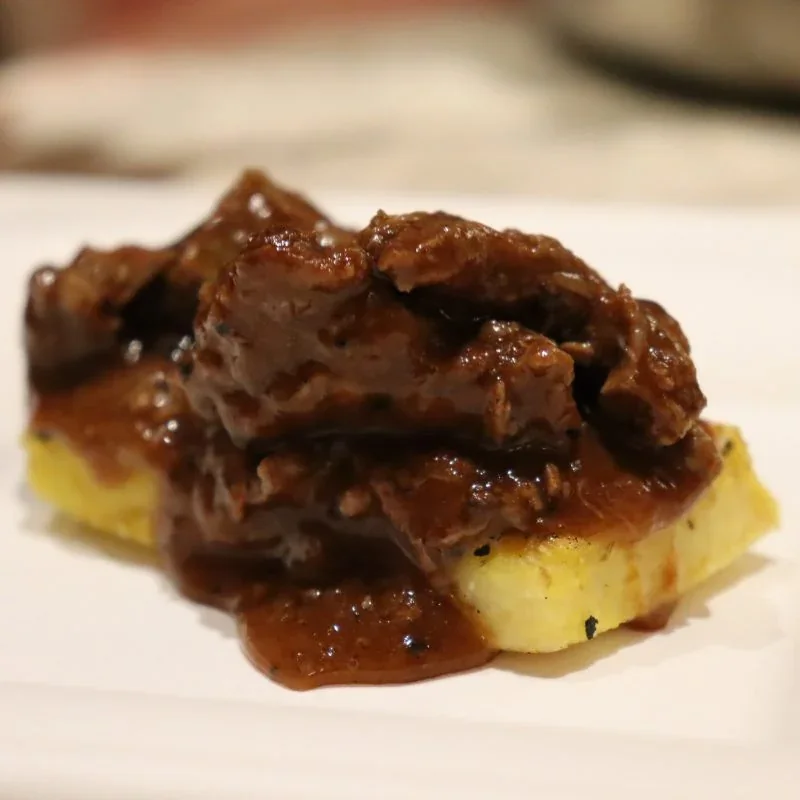
The photograph above shows Davanti’s past venison stew with chanterelles and polenta. The archive also includes Osso Buco con Polenta. Both bring together tender meat, savory cooking juices, and the mellow sweetness of corn.
Continue through northern Italy with our stories on Lake Garda cooking and risotto. For a visit to Davanti in Houston, see the menu and weekend specials for current availability.
Culinary details reviewed by Oliver Calza, Davanti Co-Founder.