
Italian regions
From the Rice Field to the Risotto: Northern Italy’s Culture of Rice
Follow rice from the water-drawn landscapes of northern Italy to the techniques, textures, and regional traditions gathered in a finished risotto.
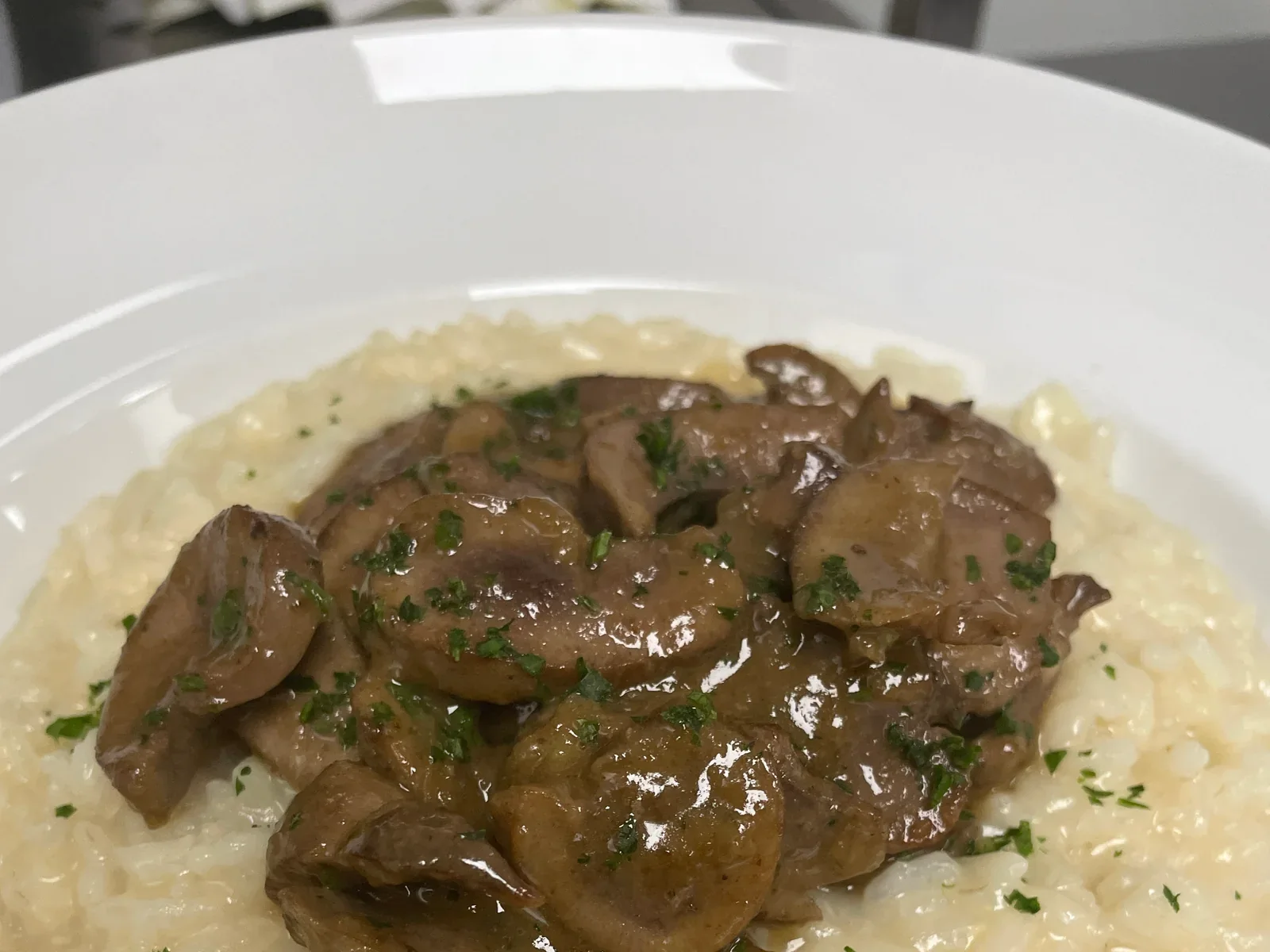
Risotto begins as a landscape.
Before the pan, the ladle, or the final spoonful of butter, there are broad northern plains crossed by canals and fields that hold a shining layer of water. Rice has become so closely associated with northern Italian cooking that it can feel inevitable, yet its place at the table grew from a long relationship among soil, water management, trade, agricultural knowledge, and local appetite.
The finished dish carries that history quietly. A well-made risotto is fluid but not soupy, creamy without needing to become heavy, and tender while each grain still keeps a small measure of resistance. Its texture is not simply poured over the rice. It is developed from the rice itself.
Why rice found a home in the north
Italy’s principal rice country lies across the Po Valley, especially in parts of Piedmont and Lombardy and into the rice-growing areas of Veneto. Flat land and an organized supply of water made flooded cultivation possible on a meaningful scale. Over time, irrigation channels and paddies reshaped not only farming but the visual character and working rhythms of the countryside.
Regione Lombardia records rice production around Pavia, Milan, Lodi, Mantua, and the Ticino area. VisitPiemonte describes the paddies around Vercelli, Novara, and Biella as a gridded, reflective landscape, with regional dishes changing across surprisingly short distances. The rice field is therefore not a generic Italian backdrop. It has its own northern geography.
Rice also entered many forms of cooking beyond risotto. It could be boiled, added to soups, baked, or combined with legumes, fish, meat, and vegetables. Mantua’s riso alla pilota, Piedmont’s panissa and paniscia, and Lombardy’s rice dishes do not all follow the same method. The grain became part of several local food languages rather than one national formula.
A variety is a cooking decision
Arborio, Carnaroli, Roma, Baldo, Sant’Andrea, and Vialone Nano are among the names diners may recognize. These are not decorative labels. Grain size, structure, starch behavior, and cooking tolerance influence the result in the pan.
Ente Nazionale Risi identifies several of these as Italy’s classic or traditional varieties. The protected specification for Riso Nano Vialone Veronese further shows how precise one rice identity can become: the PGI is made only from the Vialone Nano variety, and its cultivation and milling are tied to a defined area near Verona.
No single variety wins every risotto. A cook may want one rice for its ability to release starch while holding a firm center, another for the way it carries a delicate vegetable, and another for the consistency it brings to a rich meat preparation. The useful question is not “Which rice is best?” but “What texture should this dish have, and what must the grain carry?”
What happens in the pan
Risotto is often described as rice with broth added little by little. That is accurate, but incomplete. Each stage builds the finished sensation.
The rice is commonly toasted first, a step called tostatura. Heat surrounds the grains and prepares them for the cooking liquid. Wine may follow, contributing acidity and aroma once its sharper alcohol has cooked away. Warm broth is then incorporated as the rice cooks, with enough movement to encourage contact among the grains without reducing them to paste.
As heat and liquid work together, starch moves from the surface of the rice into the surrounding cooking medium. The spoon begins to leave a soft path across the pan. The grains swell, yet a carefully timed risotto still gives a gentle resistance at the center. This balance is why risotto is made by attention rather than by the clock alone.
The final stage, mantecatura, happens away from aggressive heat. Fat and, in many preparations, cheese are worked into the rice so the liquid and starch settle into a cohesive texture. The Italian expression all’onda—“like a wave”—describes a risotto loose enough to roll softly when the pan is moved. It should spread on a warm plate instead of standing in a rigid mound.
That wave is not the only acceptable regional texture, but it gives a vivid lesson: creaminess does not mean the grains have disappeared.
Saffron, marrow, and the stories Milan tells
Risotto alla milanese is the golden ambassador of the form. Its saffron brings a warm floral fragrance, slight bitterness, and an unmistakable color; traditional accounts also connect the dish with marrow and a rich broth. Regione Lombardia notes that the modern preparation developed from an earlier riso col zafran and became recognizable in its current form during the nineteenth century.
A popular legend places saffron at a sixteenth-century wedding connected with the stained-glass workers of Milan’s cathedral. It is a marvelous story, but best enjoyed as legend rather than documentary proof. What the plate establishes more securely is Milan’s talent for pairing richness with aromatic lift. Saffron makes the rice smell expansive before the first bite, while the grain and fat give the perfume somewhere to linger.
Elsewhere, the same method answers different landscapes. Radicchio can bring Veneto’s bitter-red edge; pumpkin gives sweetness and autumn color; lake fish or shellfish turn the rice toward water; mushrooms and truffles draw it toward the woods. The technique provides continuity, but the ingredient gives the risotto an address.
Risotto rewards restraint
A risotto can carry luxurious ingredients, yet its deepest pleasure is textural. The grain should remain recognizable. The broth should support rather than flood. A cheese, truffle, vegetable, or braised meat should change the aroma and flavor without erasing the rice underneath.
That is especially clear with truffles. Their perfume is most expressive when the surrounding food is warm, gentle, and not overcrowded. Davanti’s archive includes both Risotto al Tartufo Bianco and Risotto al Tartufo Bianco di Alba, preparations in which the rice provides a quiet, creamy foundation for an ingredient valued above all for aroma.
The next time risotto reaches the table, notice its movement before tasting it. Then notice the grain: soft at the surface, composed at the center, and held inside a sauce it helped create. In that contrast lies the patient logic of the northern Italian rice field, translated one ladle at a time.
Explore more regional cooking in the Davanti specials archive, or see what the kitchen is serving now on the menu.
Culinary details reviewed by Oliver Calza, Davanti Co-Founder.