
Italian ingredients
Balsamic Vinegar of Modena: How PDO and PGI Tell Different Stories
Understand Traditional Balsamic Vinegar of Modena PDO and Balsamic Vinegar of Modena PGI by ingredients, aging, labels, and protected production rules.
Two bottles can both say “Modena,” both carry a European geographical seal, and still contain products made under meaningfully different rules. The distinction begins with their full names:
- Traditional Balsamic Vinegar of Modena PDO (Aceto Balsamico Tradizionale di Modena DOP)
- Balsamic Vinegar of Modena PGI (Aceto Balsamico di Modena IGP)
Neither is simply “real” while the other is false. They are two protected products with different ingredients, production methods, aging requirements, and uses. Reading the complete designation is the fastest way to understand which story a bottle tells.
PDO and PGI protect different kinds of connection
The EU’s PDO seal identifies a product whose registered production stages are bound to its defined place. PGI also protects a geographical name, but under a specification built around a different form of regional connection. The acronyms are not rankings invented by a retailer; they refer to separate legal registrations.
For balsamic vinegar, the difference becomes concrete in the production rules. The word “traditional” is not decorative. It belongs to the PDO’s complete protected name and signals a particularly narrow method.
The PDO begins with cooked grape must
Traditional Balsamic Vinegar of Modena PDO is made from cooked must from authorized grape varieties associated with the province of Modena. Its specification prohibits the addition of ingredients outside the defined process, apart from the possible introduction of the bacterial culture known as the madre.
The cooked must undergoes alcoholic and acetic fermentation, maturation, and aging in the traditional production rooms called acetaie. Over time it moves through a numbered series, or battery, of progressively smaller wooden barrels. Transfer, evaporation, microbial work, and seasonal temperature changes gradually concentrate and transform it.
The minimum period is 12 years. The PDO consortium identifies the two commercial age classes as Affinato, at least 12 years, and Extravecchio, at least 25 years. Those figures describe the protected aging classes; they do not mean every drop can be assigned the age of the oldest barrel in a family’s attic.
The finished PDO is presented in the distinctive consortium bottle designed by Giorgetto Giugiaro, together with the PDO identification and numbered control elements. Bottle shape is therefore part of recognition, not just luxury packaging.
The PGI combines grape must and wine vinegar
Balsamic Vinegar of Modena PGI follows its own protected formula. The registered specification uses cooked, concentrated, or partially fermented grape must together with wine vinegar, including a defined quantity of vinegar aged for at least ten years. Production and maturation take place under the PGI rules in the Modena and Reggio Emilia area.
Its baseline maturation in wooden containers is much shorter than the PDO’s: at least 60 days. Under the current specification, the term Invecchiato is reserved for PGI vinegar aged at least three years, while Riserva indicates a minimum aging period of five years.
This wider method produces a broad range of textures and flavor balances within one protected designation. The PGI consortium explicitly notes that products can vary because of differences allowed in ingredients and process. Price, viscosity, sweetness, and acidity should not be inferred from the blue-and-yellow seal alone.
Read the front label in full
For the PGI, the protection consortium advises checking three elements:
- The complete designation Aceto Balsamico di Modena.
- The words “Protected Geographical Indication,” “PGI,” or the equivalent authorized language.
- The EU’s blue-and-yellow PGI emblem.
For the PDO, look for the complete name Aceto Balsamico Tradizionale di Modena, the red-and-yellow PDO emblem, and its standardized bottle and seal. A vague phrase such as “balsamic condiment,” “Modena style,” or “balsamic glaze” may describe another product, but it does not establish either protected identity.
Then turn the bottle around. The ingredient list distinguishes the PDO’s cooked-must-only method from the PGI’s combination of grape must and wine vinegar. An age word should match one authorized by the relevant specification. Decorative numbers, a very dark color, or a heavy bottle are not substitutes for the protected name.
Thickness is not an age certificate
Long concentration in a barrel can create density, but a thick pour by itself does not prove a PDO identity or a particular age. Different formulations within the PGI rules can also produce different densities. Separate products sold as glazes or condiments may include thickeners or sweeteners under their own labels.
This is why the ingredient list and certification marks matter more than a tilt-the-bottle test. Protected status establishes compliance with a specification; sensory preference remains personal.
Use follows balance
The PDO’s concentrated character encourages very small amounts and direct tasting, while the varied PGI category can suit everything from vinaigrettes and marinades to reductions and finishing. Those are broad culinary tendencies, not rigid laws. A cook should consider sweetness, acidity, aroma, texture, and the food on the plate.
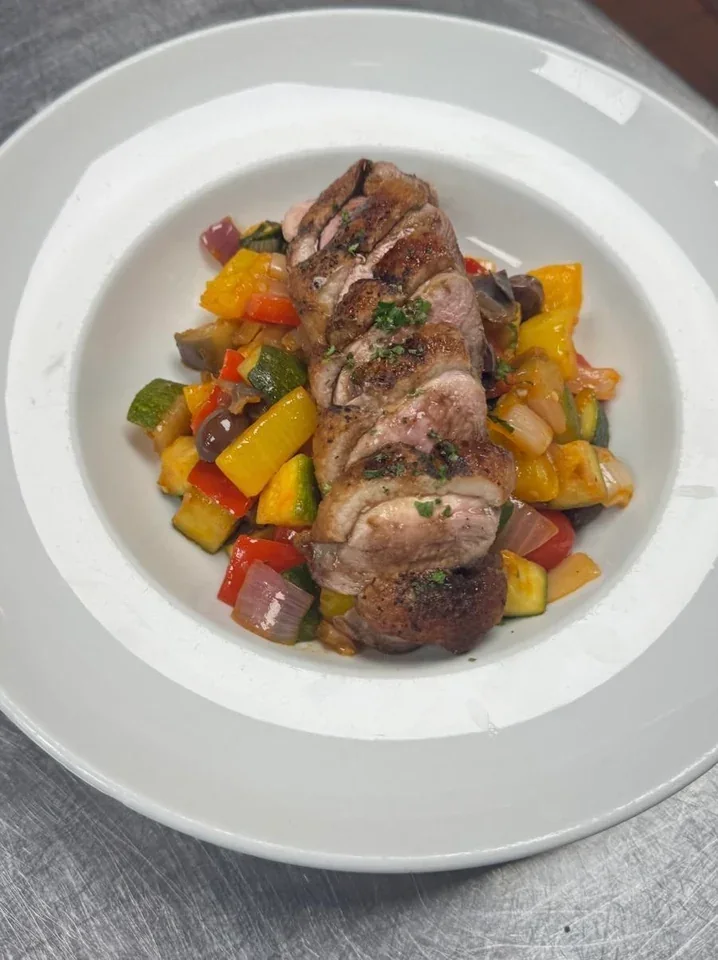
Davanti’s archive documents balsamic vinegar in several preparations. The image above belongs to Petto di Anatra all’Aceto Balsamico di Modena, recorded with duck breast, balsamic reduction, and caponata. That archive evidence does not establish which protected designation or bottle was used, so this article makes no such claim. Current preparation details should be confirmed from the menu or with the restaurant.
The shortest way to remember the difference
Traditional Balsamic Vinegar of Modena PDO is the cooked-must-only product aged for at least 12 years under the traditional Modena method. Balsamic Vinegar of Modena PGI combines grape must and wine vinegar and begins with a minimum 60-day maturation under its own regional specification. Read the whole name and the seal before reading the romance on the rest of the bottle.
Culinary details reviewed by Oliver Calza, Davanti Co-Founder.