
Italian culture
From Antipasto to Dolce: How an Italian Meal Makes Room for Conversation
Explore the language of antipasto, primo, secondo, contorno, and dolce—and why a shared Italian table has room for both a quick meal and a long celebration.
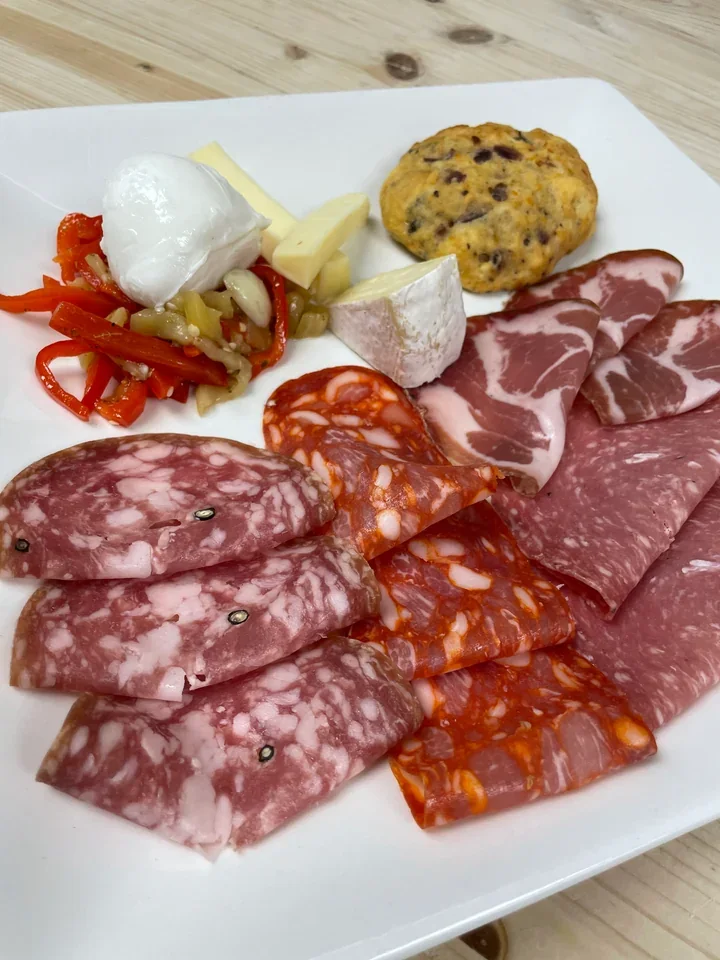
The words on an Italian menu can look like a set of rules: antipasto, primo, secondo, contorno, dolce. They are better understood as a way to describe the movement of a meal. One dish opens the appetite, another puts pasta or soup at the center, and a later course may bring a main dish and vegetables to the table. The names tell you what role a plate can play. They do not require every diner to order every course.
That distinction makes room for two equally recognizable experiences: a simple lunch built around one good plate and a celebration where several dishes mark the passage of an afternoon. The course vocabulary stays useful in both.
The names describe a sequence, not a checklist
An antipasto comes at the beginning. Treccani defines it broadly as an assortment of foods served before the rest of the meal. It might be a small individual plate or something to pass around. Davanti’s archive photograph above shows one version: cured meats, cheese, peppers, and other bites gathered on a platter. Its importance here is the gesture it suggests. When an opening plate is shared, the meal begins with conversation as well as food.
The primo is the first main course, commonly pasta, rice, or a soup. It has its own identity; pasta need not be an accompaniment to the meat or fish that follows. A bowl of pasta can also be the entire meal. What changes is the occasion and appetite, not the meaning of the word.
A secondo follows as another savory course, often centered on fish or meat. A contorno is the vegetable or legume preparation served alongside it. Treccani’s definition makes that relationship explicit. Think of the difference between naming a vegetable as an afterthought and giving it a place at the table: greens, beans, or roasted vegetables can shape the balance of a plate through freshness, bitterness, sweetness, or texture. The course name says how it relates to the main dish, not that it is unimportant.
Dolce means something sweet. It may close a larger meal, but dessert is a choice, not a compulsory final step. Fruit or simply the end of the savory courses may be enough. The same table can hold a different ending another day.
Everyday appetite and the longer occasion
The full sequence is familiar enough to have become shorthand. A 2015 essay in the Accademia Italiana della Cucina’s Civiltà della Tavola recalls the old litany of antipasto, primo, secondo, contorno, dolce, and coffee at a restaurant meal. The writer also describes people choosing fewer courses—only a plate of pasta, for example, or a secondo with a contorno. It is a helpful reminder that a traditional structure and everyday flexibility can coexist.
Celebratory food can create more time at the table. Italia.it describes lasagna as a familiar Sunday family dish in several regional forms. The point is not that every Italian family gathers every Sunday or serves the same recipe. It is that a dish can become part of an occasion: someone prepares it, others arrive, and lunch gives people a reason to sit together. On another day, one bowl may do that work just as well.
This flexibility also keeps the meal rooted in place. What fills each course changes with region, season, household, and the person cooking. Pasta in broth and pasta dressed with sauce both belong under primo, yet they call for different ingredients and different hands at the stove. A vegetable can be a contorno in one meal and the heart of another. The names organize the table without making Italy’s regional food cultures identical.
What it means to make time at the table
UNESCO’s description of the Mediterranean diet treats eating together as a social practice involving hospitality, exchange, and the passing on of knowledge. That heritage spans several Mediterranean countries, including Italy. Its lesson for an Italian meal is larger than course order: food also carries stories about where ingredients came from, who taught a preparation, and why a dish belongs to a particular gathering.
Pace matters because it gives those exchanges space. A shared starter can invite the first question; a pause before the next plate lets someone answer it. A longer meal may stretch that rhythm over courses, while a short one can still make room for company. Neither length guarantees conviviality. Attention to the people at the table does more than a stopwatch can measure.
At Davanti, the current menu uses some of this language, including Antipasto and Dolci. Read those headings as invitations to choose how you want to eat together. Start with a plate to share, make one dish your meal, or let dinner unfold further. The pleasure lies in giving each choice—and each person at the table—its due time.
Culinary details reviewed by Oliver Calza, Davanti Co-Founder.