
Veneto
Radicchio at the Italian Table: Treviso, Castelfranco, and the Pleasure of Bitterness
Meet Treviso’s precoce and tardivo radicchio and Castelfranco’s speckled leaves, then explore how their crunch and gentle bitterness shape Italian dishes.
Radicchio gives a plate more than a flash of red. Its leaves can bring crispness, a delicate sweetness, and a pleasant bitter finish. In a salad, that finish sits beside the dressing and other ingredients. Folded into risotto, it becomes part of a warm, rounded mouthful.
Veneto’s Radicchio Rosso di Treviso and Radicchio Variegato di Castelfranco offer an especially useful introduction to this variety of flavors. Their broad leaves, slender ribs, and pale rosettes reflect distinct growing traditions and bring different textures to the table.
Treviso precoce: broad leaves and an early harvest
The precoce, or early, type of Radicchio Rosso di Treviso has an elongated, closed head with broad red leaves and pronounced white ribs. Its consortium describes a gently bitter flavor and moderately crisp texture. Harvest begins in September, after the leaves have been tied together in the field and kept from the light for a period before cutting. The consortium’s precoce guide explains that preparation.
The broad leaf and substantial rib give each bite more than one texture. That is worth noticing when tasting radicchio raw: the softer red portion and the firmer white center do different work. A salad becomes more interesting when the cut preserves some of that variation.
Treviso tardivo: the work behind the narrow leaves
The tardivo, or late, type has the striking narrow red-and-white leaves that often curl inward at their tips. Its form depends on work after the harvest. The consortium describes forcing and blanching the harvested plants in running spring water, followed by careful trimming and washing. Its tardivo guide traces the process and the growing area between Treviso, Padova, and Venezia.
Blanching here is a growing technique that restricts light while the plant continues developing. The finished leaves carry the results of weeks of patient handling, from the field through the final trimming.
The consortium emphasizes the finished product’s crisp rib and agreeable bitterness, and describes uses both raw and cooked. The long leaves make that structure easy to appreciate: color, shape, and texture are closely connected.
Castelfranco: a pale rosette with a gentler character
Radicchio Variegato di Castelfranco looks different again. Its spreading, cream-colored leaves carry flecks ranging from red to violet, forming a loose rosette. The consortium describes a flavor moving from sweet toward delicately bitter and identifies salad as its principal use. The Castelfranco profile also documents the care involved in growing and blanching it.
The delicate leaves make a generous salad in their own right. Their pale background and scattered color invite a closer look, while the gentle bitterness gives each forkful a fresh, lingering finish.
One vegetable, two textures in a risotto
A recipe published by the consortium uses Castelfranco radicchio in two ways: some is gently cooked before being added to the rice, while raw strips are reserved for the finish. Its preparation includes Carnaroli, shallot, broth, butter, Grana Padano, and steamed trout. The consortium’s Castelfranco risotto offers a concrete example of a vegetable providing both a cooked foundation and a fresh accent.
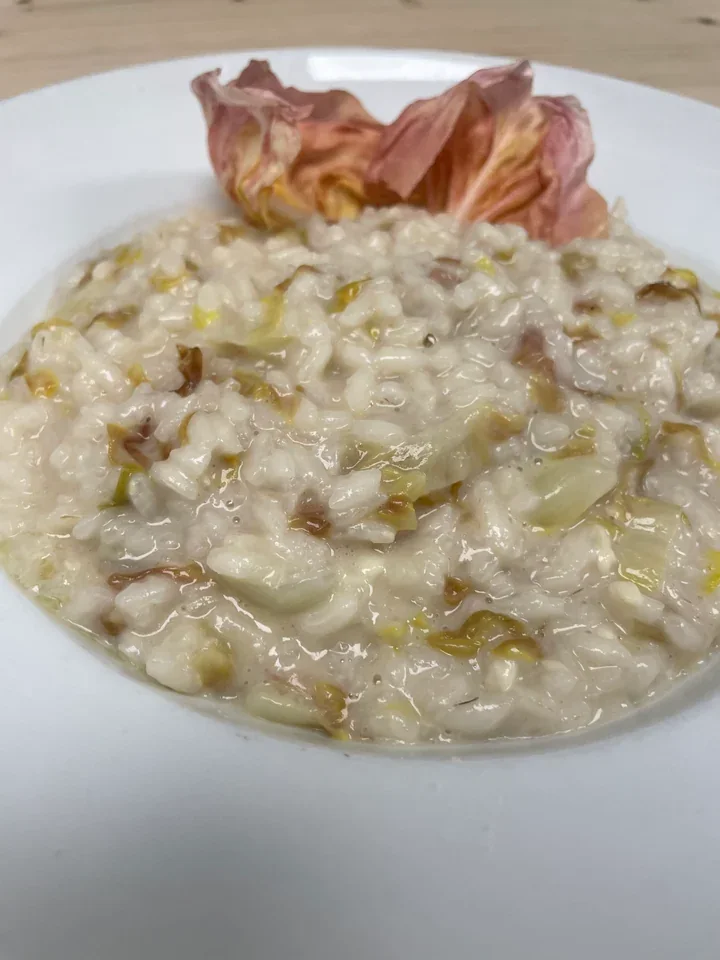
Davanti’s photograph above shows a past Risotto al Radicchio Rosa di Verona, with Carnaroli rice and radicchio. Another archived preparation pairs radicchio with pork belly, fennel, and orange. Together they show how bitter leaves can complement a mellow grain or the sweetness of citrus.
Read more about northern Italy’s risotto traditions or follow the warmer season through Italian summer vegetables. For current dishes at Davanti, visit the menu and weekend specials.
Culinary details reviewed by Oliver Calza, Davanti Co-Founder.