
Italian sauces
Pesto Beyond Basil: Genovese, Trapanese, and Walnut Sauces
Follow pesto from Genova’s basil and pine nuts to Trapani’s tomatoes and almonds, with a closer look at Liguria’s distinct walnut sauce.
Pesto often brings one image to mind: a green sauce, fragrant with basil, clinging to pasta. The Genovese preparation deserves that recognition. Yet reading a menu closely reveals other names: pesto alla trapanese, pesto di noci, or pesto di rucola. Each asks us to pay attention to the ingredients after the word pesto.
Basil and pine nuts, tomatoes and almonds, walnuts and dairy: each combination gives the pasta a different character. Following those ingredients leads from Liguria’s fragrant green pesto to the bright tomato sauces of western Sicily.
Genovese: basil at the center
Genova’s civic tourism guide documents a pesto made with basil, pine nuts, garlic, olive oil, salt, and two kinds of aged cheese. Its method begins with garlic and salt in a mortar, adds pine nuts and basil, then incorporates cheese and oil. The leaves are worked gently, with attention to preserving their aroma and color. Visit Genoa’s recipe is a useful reference for the local tradition.
The guide also names several pasta partners, including trofie, trenette, and thin sheets called mandilli de saea. A little pasta cooking water can loosen the sauce before dressing. In trenette avvantaggiate, potatoes and green beans join the pasta.
Those details explain the appeal beyond the color. Pine nuts lend body, cheese contributes savor, and oil helps the sauce coat the pasta. The finished consistency matters: pesto should reach each bite without hiding the pasta beneath a heavy mound.
Trapanese: tomatoes and almonds change the balance
In western Sicily, pesto alla trapanese follows another regional pantry. Italia.it describes the combination of basil, tomatoes, almonds, pecorino, and Nubia’s red garlic, served with the curled pasta called busiate. Its guide to Sicilian vegetable cooking places the dish in the province of Trapani.
Tomato makes an immediate difference. Its juice and acidity give the sauce brightness, while almonds bring a gentle nuttiness and texture. Basil and garlic keep the mixture aromatic.
The same guide describes Pantelleria’s ammogghiu, a tomato condiment with garlic, chile, and basil. Here chile adds warmth to the tomato’s brightness, giving another island pantry its own expression.
Walnut sauce has its own Ligurian identity
Genova’s salsa di noci is an ivory-colored walnut sauce closely associated with pansoti. The civic guide’s version combines walnuts and garlic with milk-soaked bread, Parmigiano Reggiano, olive oil, and prescinseua, a local curd. Its method calls for removing the walnut skins and adjusting the sauce to a creamy consistency. Visit Genoa’s walnut-sauce page also suggests loosening it with pasta cooking water when needed.
Here the nut takes the lead. Bread and dairy give the sauce a soft body, creating a different setting for filled pasta than the aromatic intensity of basil pesto.
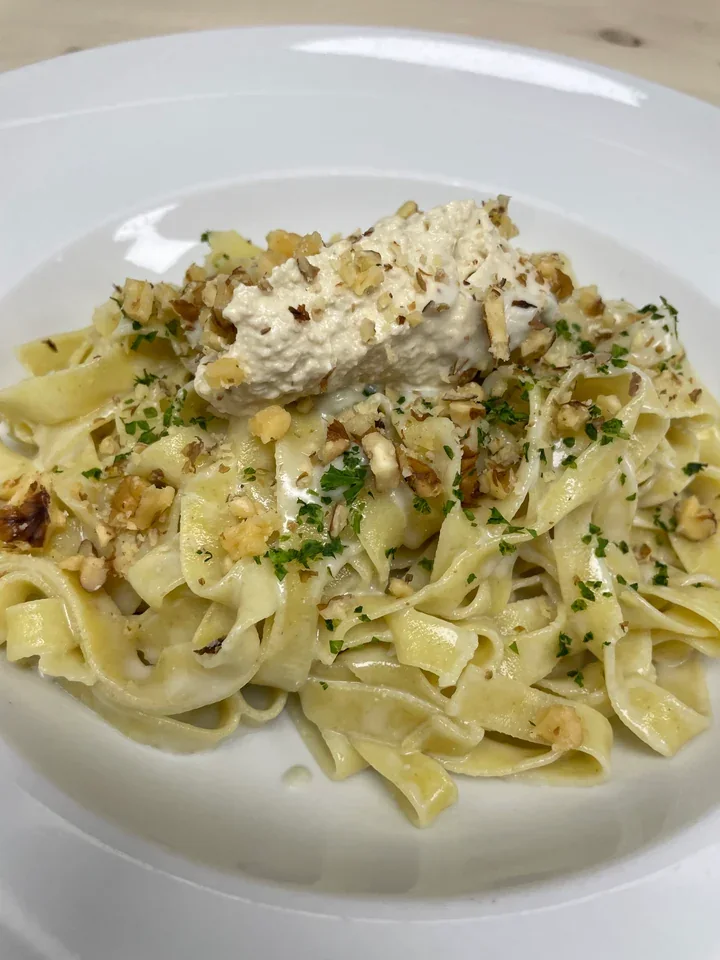
Davanti’s archived Fettuccine con Gorgonzola e Pesto di Noci, pictured above, brings walnuts together with the savory tang of Gorgonzola. The broad pasta ribbons give that rich combination room to coat each bite.
Reading newer variations
Contemporary pestos can begin with other vegetables, too. The Treviso radicchio consortium publishes a radicchio pesto with cashews and Parmigiano Reggiano. Its recipe briefly cooks the leaves before blending, making clear that the method can change with the ingredient.
Davanti’s archive offers another example in a pinsa with marinated salmon, ricotta, and arugula pesto. Read these names as invitations to discover what leads the sauce: an herb, a nut, a vegetable, or a combination.
For more context, explore Italy’s filled pasta and our guide to olive oil labels. The archive photographs record past dishes; check the current menu and weekend specials when planning dinner.
Culinary details reviewed by Oliver Calza, Davanti Co-Founder.