
Mushrooms
Mushrooms at the Italian Table: Porcini, Finferli and Cremini
A diner’s guide to porcini, Trentino’s finferli and cultivated cremini, with a look at the baby bella mushroom sauce on Davanti’s meat ravioli.
The word funghi opens a broad part of the Italian table. Mushrooms can sit beside a braise, gather in a risotto or form the sauce around filled pasta. Their role changes with the variety and the preparation: a firm slice offers something different from a mushroom folded into a soft, creamy sauce.
Three names make a useful beginning. Porcini belong to some of Italy’s best-known mushroom traditions. Finferli are chanterelles, also called gallinacci. Cremini, often sold as baby bellas, bring a familiar cultivated mushroom into the same conversation.
Porcini and a protected name
The Museo del Fungo Porcino di Borgotaro explains the characteristics required for Fungo di Borgotaro IGP. The protected product can be sold fresh or dried, with defined qualities for each form. For fresh mushrooms, its account emphasizes sound, firm caps and stems, cleanliness and freedom from dehydration.
The name on a menu therefore deserves a careful reading. Porcini identifies a mushroom group; Fungo di Borgotaro IGP identifies a particular protected product. A dish described simply as porcini does not establish that geographical certification.
Fresh and dried mushrooms also suggest different possibilities at the table. In one preparation, the shape and texture of a piece may be the focus. In another, mushroom flavor is carried through the sauce. Looking at both the ingredient and its treatment tells you more than the word funghi alone.
Finferli in Trentino
Visit Trentino’s mushroom guide lists porcini, finferli and other mushrooms found in the region, and places autumn at the center of that seasonal tradition. Its cooking suggestions connect mushrooms with risotto, meat, polenta and cheese. The guide also uses finferli and gallinacci for chanterelles, a useful vocabulary point when reading an Italian menu.
Those pairings offer several ways to build a plate. Polenta gives mushrooms a mellow grain base, while rice carries them through each spoonful. Beside meat, mushrooms can become a distinct accompaniment or share the cooking sauce. The same ingredient can feel central or supporting depending on how it reaches the table.
Cremini and baby bellas
The Mushroom Council’s crimini guide lists cremini as an alternative spelling and baby bella as a common name. These brown mushrooms have a firm texture and a full, savory flavor. The council highlights their usefulness with beef, game and vegetables, and in preparations such as roasting and sautéing.
Baby bella and porcini are different names for different mushrooms. The council’s wild-mushroom overview treats porcini and chanterelles separately from cultivated varieties. Recognizing the name lets you appreciate the dish on its own terms instead of expecting every mushroom sauce to taste alike.
A creamy sauce around filled pasta
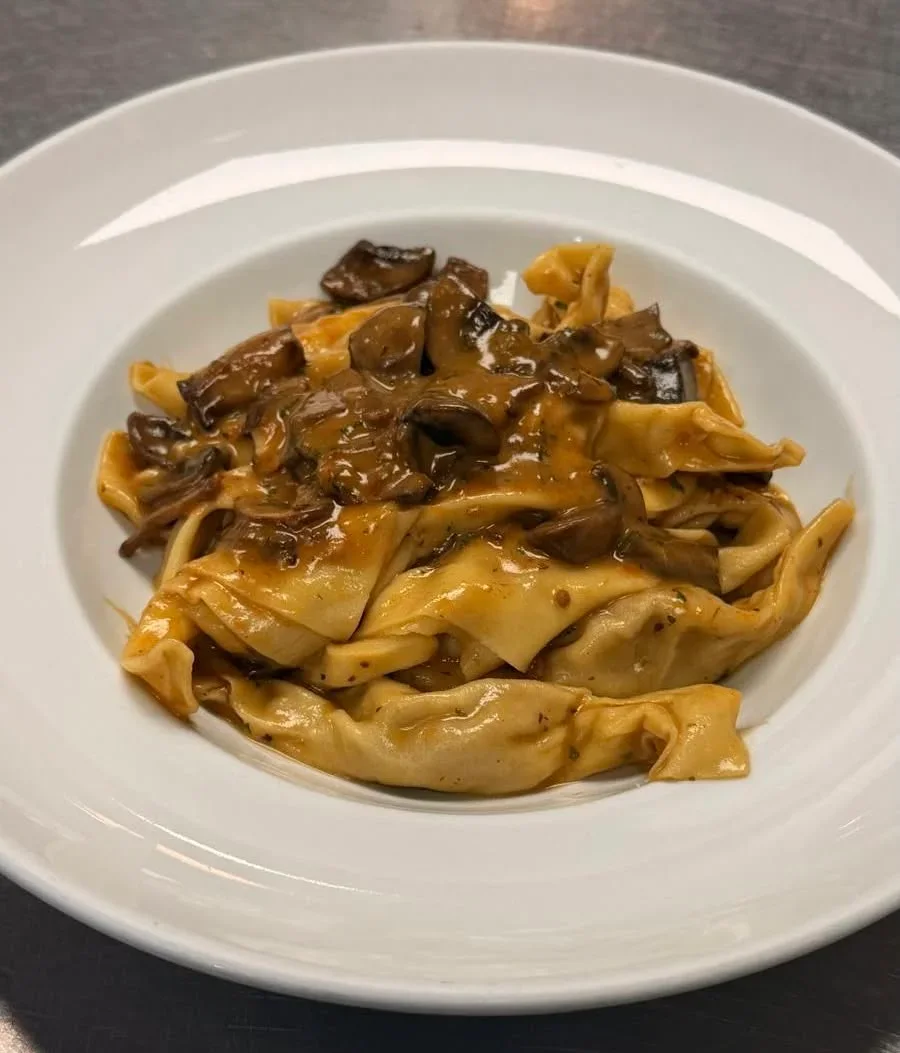
The photograph shows Davanti’s Ravioli in Salsa di Funghi alla Parmigiana. Homemade ravioli enclose braised beef and pork with onions, carrots and celery; baby bella mushrooms form the creamy sauce around them.
Here the mushroom slices provide texture beside the soft pasta, while the sauce connects them to the savory filling. The archive offers other combinations too, including venison with chanterelles and polenta.
Continue with our guides to Italian filled pasta and northern Italian polenta. For current dishes at Davanti in Houston, see the weekend specials and menu.
Culinary details reviewed by Oliver Calza, Davanti Co-Founder.