
Italian culture
Truffle Hunting in Italy: The Dog, the Forest, and the Hidden Harvest
Why Italy’s truffle culture begins in the woods—with trained dogs, ecological knowledge, seasonal restraint, and traditions passed between generations.
The most important part of a truffle dish happens before a cook touches a pan. It begins under leaves and soil, where a trained dog catches a scent that a person cannot see. The handler reads the dog, the slope, the plants, the season, and the weather. Only then does a small tool enter the earth.
Italy’s truffle tradition is often described through luxury: rare specimens, famous auctions, or a shower of fine shavings over pasta. Those images are real, but they show the final minutes of a much longer story. The culture starts in rural landscapes and in knowledge passed from one hunter to another.
In 2021, UNESCO inscribed “Truffle hunting and extraction in Italy, traditional knowledge and practice” on the Representative List of the Intangible Cultural Heritage of Humanity. The wording is precise. UNESCO recognized the knowledge and practice—not one species, one town, one recipe, or the market price of a truffle.
A harvest guided by a relationship
Italian truffle hunters are called tartufai; in parts of Piedmont, the local word trifolau is also used. UNESCO describes two connected stages: finding the places where truffles grow, then carefully extracting them. A trained dog helps locate the underground fungus. The hunter uses a special narrow spade, opening only the necessary ground and protecting the surrounding soil.
The dog is not a simple tool. A successful search depends on a working relationship built through training, attention, and trust. The handler learns to distinguish a serious signal from ordinary curiosity; the dog learns that a particular scent leads to a shared reward. Their communication can look almost silent because so much has become habit.
The landscape must also be read. Truffles live below ground in association with the roots of certain trees. Conditions differ by species and territory, so a hunter’s map is made from vegetation, soil, moisture, elevation, and remembered seasons. UNESCO notes that this ecological knowledge has been transmitted orally for centuries through expressions, stories, fables, and anecdotes. The search therefore carries both practical information and local identity.
Why careful extraction matters
A truffle is the fruiting body of a fungus whose larger life remains hidden in the soil. Digging carelessly can disturb the habitat that makes future harvests possible. Traditional practice limits the opening, removes the truffle with a suitable implement, and restores the ground.
Italian law gives that restraint a public framework. National Law No. 752 of 1985 regulates the collection, cultivation, and sale of truffles, while regional rules and calendars govern local seasons and methods. The point is not bureaucracy for its own sake. Maturity, habitat, and regeneration all matter when the harvest depends on a living underground system.
The calendar is not frozen. In 2024, Regione Piemonte reported that the opening of the white-truffle search had been moved to October 1 after consultation with truffle-hunter associations and scientific advisers. The region connected the decision to maturity, drought, climate change, and protection of future harvests. That example shows tradition doing what living traditions must do: preserving knowledge while responding to changed conditions.
Italy has truffle territories, not one “truffle country” flavor
Truffles grow in different Italian landscapes, and species do not taste or smell identical. Piedmont is internationally associated with the white truffle of Alba. Umbria’s official tourism portal describes the prized black truffle found around Norcia and Spoleto and in other areas along the Nera, as well as near Monte Subasio. It notes its relationship with calcareous and clay soils and trees including oak, holm oak, beech, and chestnut.
These names are geographic clues, not interchangeable luxury labels. A white truffle’s perfume can be intensely immediate; prized black truffle develops a different, earthier aromatic register. Summer and winter species differ again. A responsible cook identifies what is actually in hand and chooses a dish that leaves room for its aroma.
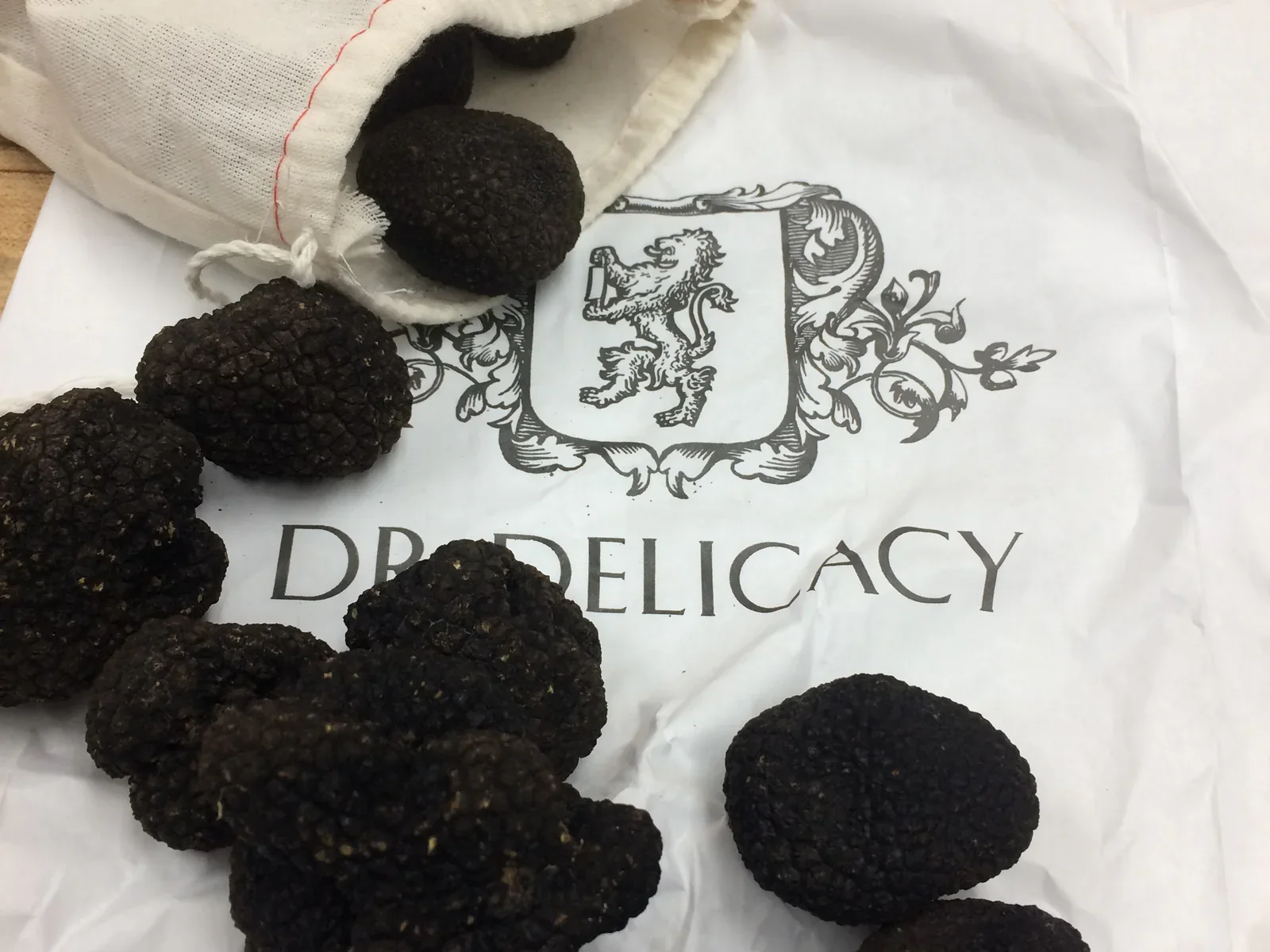
The Davanti archive photograph shows dark, knobbly truffles gathered beside a cloth bag. Because the image alone does not establish the species, season, or place of harvest, we do not assign it a more specific identity. Visual honesty is part of ingredient respect.
The kitchen’s task is to reveal, not bury
Truffle aroma reaches the table before the first bite. It can suggest damp earth, woods, garlic, fermentation, or warm nuts, but the exact impression changes with species, maturity, and diner. That aromatic power explains why restraint is so important.
Warmth helps carry the perfume; excessive heat can flatten it. Gentle foods create contrast without competition. Pasta, risotto, eggs, potatoes, butter, and mild cheese are familiar partners because they offer starch, fat, and warmth while allowing the truffle to remain the clearest voice. Thin slicing increases the surface area exposed to the diner, turning a small amount into an aromatic layer across the plate.
There is no single compulsory pairing. Regional cooking connects the truffle to what grows and is cooked nearby. Our specials archive shows several ways Chef Roberto has worked within that idea, from tajarin with white truffle to Cannelloni alla Spoletina. Those pages document specific Davanti dishes; they do not claim to define every Piedmontese or Umbrian preparation.
A community gathered around something hidden
UNESCO also records the social life around the search. Knowledge moves through families and local associations. Feasts mark the beginning or end of seasons. Stories told among hunters preserve names, places, close calls, exceptional finds, and lessons about the woods.
That communal dimension explains why the UNESCO inscription matters. The truffle itself can be weighed and sold. The ability to find it responsibly cannot be reduced to a commodity. It lives in memory, observation, language, the dog-handler bond, and the decision to leave the habitat able to produce again.
At the table, a few aromatic shavings can make truffle seem effortless. In the forest, nothing about it is effortless. The ingredient is the visible result of an invisible ecology and a practiced human-animal partnership.
That is the most useful way to understand Italian truffle culture: not as a shortcut to luxury, but as a lesson in attention. The tartufo is hidden. The knowledge required to find it is carried in plain sight—from one walk, one dog, and one generation to the next.
Explore more regional dishes in the weekend-special archive, or see Davanti’s current offerings on the menu.
Culinary details reviewed by Oliver Calza, Davanti Co-Founder.