
Lazio
Porchetta: Ariccia’s Roast-Pork Tradition and the Italian Table
Explore porchetta through Ariccia’s roast-pork tradition, rosemary and garlic, the classic panino, and Davanti’s porchetta pinsa.
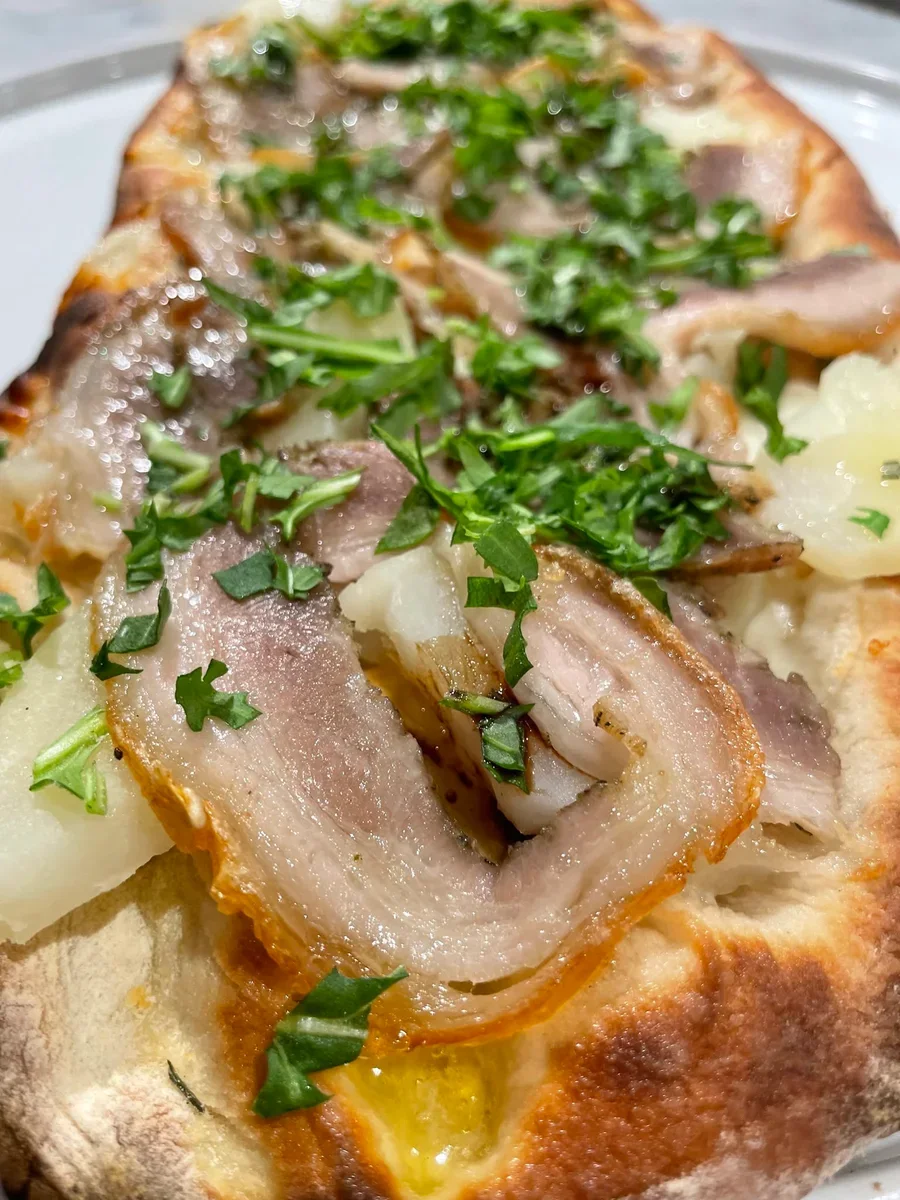
Roasted pork, fragrant seasoning and a contrast between tender meat and crisp skin make porchetta easy to remember. It can be the center of a meal or the filling of a sandwich eaten standing up. Either way, the appeal begins with a generous slice: meat and fat together, with seasoning carried through the roast.
Ariccia, in Lazio’s Castelli Romani, offers a particularly clear introduction. Its porchetta tradition connects skilled roasting with the everyday pleasure of eating well in company.
Ariccia and the porchettari
Visit Lazio’s guide to Porchetta di Ariccia describes the work of local artisans who season, tie and oven-roast the pork. The town’s product received IGP recognition in 2011. Those initials identify a protected geographical indication; in this case, the full name matters because it refers to a defined local product.
The craft has several visible stages. Seasoning reaches the interior, tying holds the roast together, and the oven develops its exterior. When the finished pork is sliced, that work appears in the relationship between the seasoned meat and its browned surface. The person carving the roast is presenting the result of all three.
Rosemary, garlic and black pepper
Lazio’s agricultural agency, ARSIAL, identifies rosemary, garlic and black pepper as characteristic flavors of Porchetta di Ariccia IGP. Its product account includes both the whole roast and the smaller tronchetto. It also describes a crisp upper crust, with the underside allowed to remain softer.
That detail makes the dish more interesting to taste. Crispness need not be uniform across every piece. A slice can combine a brittle edge, yielding meat and a softer section of skin. The herbs and pepper then give those textures a shared aromatic character.
ARSIAL also records the familiar ways of serving it: sliced, traditionally cold, or tucked into a panino. Bread makes a practical partner because it catches the juices and gives the rich pork a plain, substantial base.
A food for a shared table
Porchetta is part of Ariccia’s social landscape as well as its food production. Visit Lazio’s account of the town places it among the narrow streets and fraschette, the local taverns associated with the Castelli Romani. The town’s porchetta festival began in 1950, celebrating a food already woven into local life.
Imagine the difference between a plated slice and a sandwich passed across a counter. The ingredients may be similar, but the occasion changes. One invites a slower meal with other dishes; the other gathers bread, meat and seasoning into a few direct bites. Porchetta is comfortable in both settings.
From the roast to Davanti’s pinsa
The photograph above shows Davanti’s Pinsa con Porchetta, Patate e Rucola, with roasted pork, potato, stracciatella and arugula. The creamy cheese and peppery leaves bring their own contrast to the pork and crust. Ariccia provides regional context for porchetta; the photographed dish is Davanti’s preparation, without a claim of IGP-certified sourcing.
Pinsa has its own story. Turismo Roma dates modern pinsa romana to Corrado Di Marco’s work in 2001. Our pizza and pinsa guide explores the styles further, while Inside Burrata explains stracciatella’s place in fresh-cheese making.
For a visit to Davanti in Houston, check the weekend specials and menu for current availability.
Culinary details reviewed by Oliver Calza, Davanti Co-Founder.