Italian regions
Gnocchi Across Italy: Potato, Ricotta, Pumpkin, and the Logic of the Dumpling
Potato, ricotta, and pumpkin reveal why Italian gnocchi are a family of regional dumplings rather than one fixed recipe.
Ask for gnocchi and one person may picture pale potato pillows marked by the tines of a fork. Another may think of soft ricotta dumplings, orange pumpkin rounds, or baked semolina disks. The shared word is useful, but it does not point to one national formula.
Gnocchi are better understood as a family of shaped bites whose texture comes from the relationship among a principal ingredient, enough binder to hold it together, and a cooking method suited to the dough. Potato, ricotta, and pumpkin make that relationship especially clear. Change the foundation and nearly every decision changes with it: how much flour the mixture accepts, how gently it must be handled, what sauce feels balanced, and what “light” means on the fork.
A name broad enough for many doughs
Treccani defines the familiar potato version as small pieces made from cooked, mashed potato and flour, then boiled and dressed with sauce or butter. The same entry immediately widens the category to regional specialties made with semolina, cornmeal, liver, and other ingredients. Even gnocchi alla romana belong to a different construction: semolina, milk, and butter are formed into disks and baked rather than rolled as potato dough.
That range is not a modern loosening of the term. It is evidence that Italian cooks have long used the dumpling form as a practical answer to different local pantries. A gnocco can be cylindrical, oval, round, rough, or smooth. What unites the family is less a mandatory ingredient list than the transformation of a soft mixture into individual pieces that can carry a condiment without losing themselves.
Potato gnocchi: structure without heaviness
Potato gnocchi look simple because their ingredient list can be short. Their difficulty lies in moisture. Cooked potato supplies starch and body, but also water; flour makes the dough workable, yet too much can turn a tender bite dense. The cook therefore tries to add enough structure for shaping and boiling without allowing the binder to become the main event.
Handling matters for the same reason. A light touch preserves softness. Ridges or a shallow thumb mark are not merely decorative: the irregular surface catches sauce, while the center remains plump. Size must be consistent enough that the pieces cook together, but perfect geometry is not the goal.
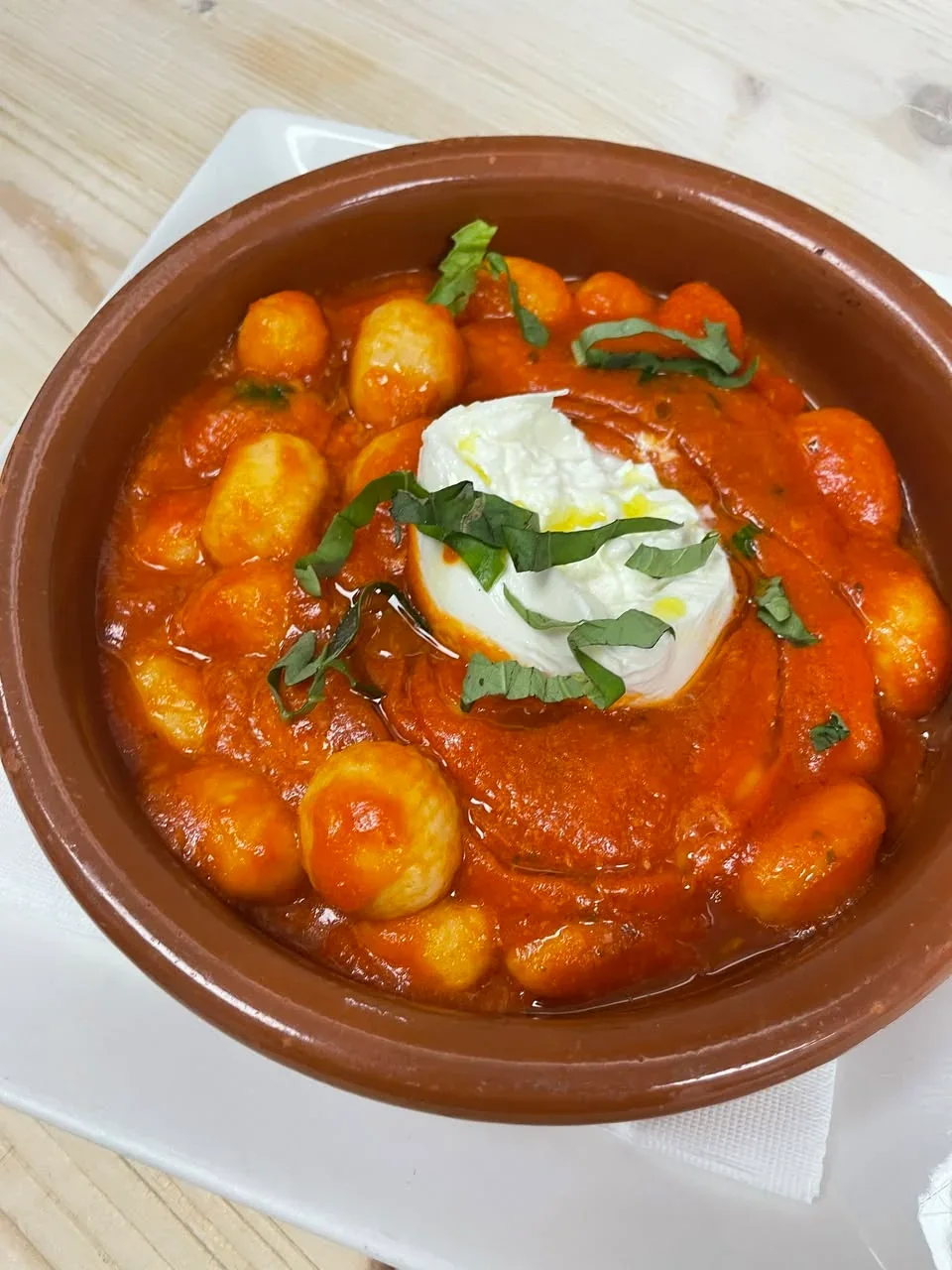
Campania gives this form one of its best-known settings. Italia.it describes gnocchi alla sorrentina as potato gnocchi with tomato, basil, fiordilatte, and grated cheese, finished in the oven. Here the dumpling does more than hold sauce on its surface. A brief bake lets tomato and melting cheese gather around the gnocchi, turning separate pieces into a cohesive dish while the potato still provides a quiet, earthy center.
Ricotta gnocchi: softness begins with drainage
Ricotta changes the problem. Rather than relying on mashed potato, the dough begins with a fresh dairy ingredient whose water content can vary. Drainage becomes part of the recipe before mixing begins. If the ricotta is wet, more flour may be needed to make a shape hold; that extra flour can mute the delicate character that made ricotta appealing in the first place.
Tuscan gnudi illuminate this side of the family. Visit Tuscany explains that they are called malfatti around Siena and gnudi around Florence: “naked” because they resemble a ravioli filling without its pasta covering. The documented preparation combines well-drained ricotta with spinach, grated cheese, egg, nutmeg, and a light coating of flour. Their handmade irregularity is expected rather than corrected.
Not every ricotta dumpling is a Tuscan gnudo, and the terms should not be treated as interchangeable across Italy. Still, the example shows a useful principle. With ricotta, tenderness comes from controlling liquid and binder before the dumpling reaches the water. The best accompaniment often respects that softness—brown butter and sage, a restrained tomato sauce, or another condiment that can coat without overwhelming.
Pumpkin gnocchi: sweetness, color, and variable moisture
Pumpkin brings its own tension. Its flesh contributes color and sweetness, but varieties differ in water content and density. Regione del Veneto describes the traditional Zucca Marina di Chioggia as sweet, floury, and free of fibrousness, qualities that make it particularly suited to pumpkin gnocchi. That description helps explain why a recipe cannot be separated from the pumpkin chosen for it.
A drier, mealier squash can provide more body with less binder. A wetter one may need roasting, draining, or a different proportion of flour. The goal is not to make pumpkin behave exactly like potato. It is to preserve enough of its identity—its warm color, vegetal sweetness, and autumn aroma—while creating a piece that survives shaping and cooking.
Visit Trentino’s autumn collection includes pumpkin-and-ricotta gnocchi, a reminder that these categories can overlap. Italian regional cooking is full of such useful crossings. Potato is not the only neutral base, ricotta is not confined to one shape, and pumpkin does not require one fixed partner.
The sauce completes the argument
Each dough suggests a different kind of balance. Tomato and melting cheese can meet the mild starch of potato. Butter, sage, or a lighter sauce can preserve the gentle dairy quality of ricotta. Pumpkin can welcome browned butter, aged cheese, herbs, or a savory counterpoint to its sweetness. These are tendencies, not laws; regional and household recipes keep producing exceptions.
The more reliable lesson is to taste the dumpling before choosing how loudly the sauce should speak. Gnocchi are small, but their texture is the center of the dish. A condiment should reveal the potato, ricotta, or pumpkin underneath rather than reduce every version to the same coated bite.
The photograph above comes from Davanti’s archive and documents one past Gnocchi di Patate alla Sorrentina presentation. It does not imply that every variation discussed here is currently offered, or identify the source of any ingredient. For current availability, see the menu and this week’s specials.
Culinary details reviewed by Oliver Calza, Davanti Co-Founder.