Piedmont
Leeks in the Italian Kitchen: From Cervere to a Silky Pasta Sauce
Meet Piedmont’s Porro Cervere, discover why leeks deserve the center of a dish, and explore Davanti’s tagliolini with leeks and clams.
A leek can be easy to overlook when it disappears into a sauce. Yet that softness is often the point. In a plate of pasta, leeks can supply a mellow vegetable flavor and enough body to connect the other ingredients without leaving large pieces on the fork.
Italian food also offers a place where the leek receives top billing. Cervere, in Piedmont’s province of Cuneo, has built a local identity around a long, slender winter leek. Its story is a useful reminder to give familiar vegetables the same attention we give cheese, wine or pasta shapes.
A vegetable with a hometown
The Comune di Cervere describes a local selection of the long winter leek, grown through methods passed from one generation to the next. Much of the work remains manual. The town connects its slender, tender stalks and sweet flavor with sandy soils near the River Stura, irrigation water and the area’s growing conditions.
The municipality places maturation toward the end of October, with harvesting able to continue through winter. This is a specific agricultural calendar for Cervere. It should not be read as a schedule for every leek grown elsewhere, or as an indication that a restaurant’s leeks came from Piedmont.
Why a local variety matters
The Province of Cuneo’s product account identifies the crop as a local selection of a long winter leek and links its cultivation to inherited methods. That combination of seed selection and practice is what makes the story worth following. A vegetable’s name can preserve both a place and the work of the people who grow it.
For a diner, the lesson is pleasantly practical: pay attention to the vegetable itself. How tender is it? Does it remain in pieces, or become part of a smooth sauce? Is its sweetness the first flavor you notice, or does it quietly support something more savory?
From field to festival
Cervere’s annual leek fair gives the crop a public stage. The fair organizers’ account describes the consortium’s role in protecting the local mark and working with growers. It also explains how widely the event involves the town’s families, from organization to the practical work of welcoming visitors.
A festival built around a single vegetable changes its status on the table. The leek becomes something to seek out and compare across preparations. It encourages the same curiosity that might otherwise be reserved for a prized mushroom or an unfamiliar regional pasta.
Leeks, clams and fine pasta at Davanti
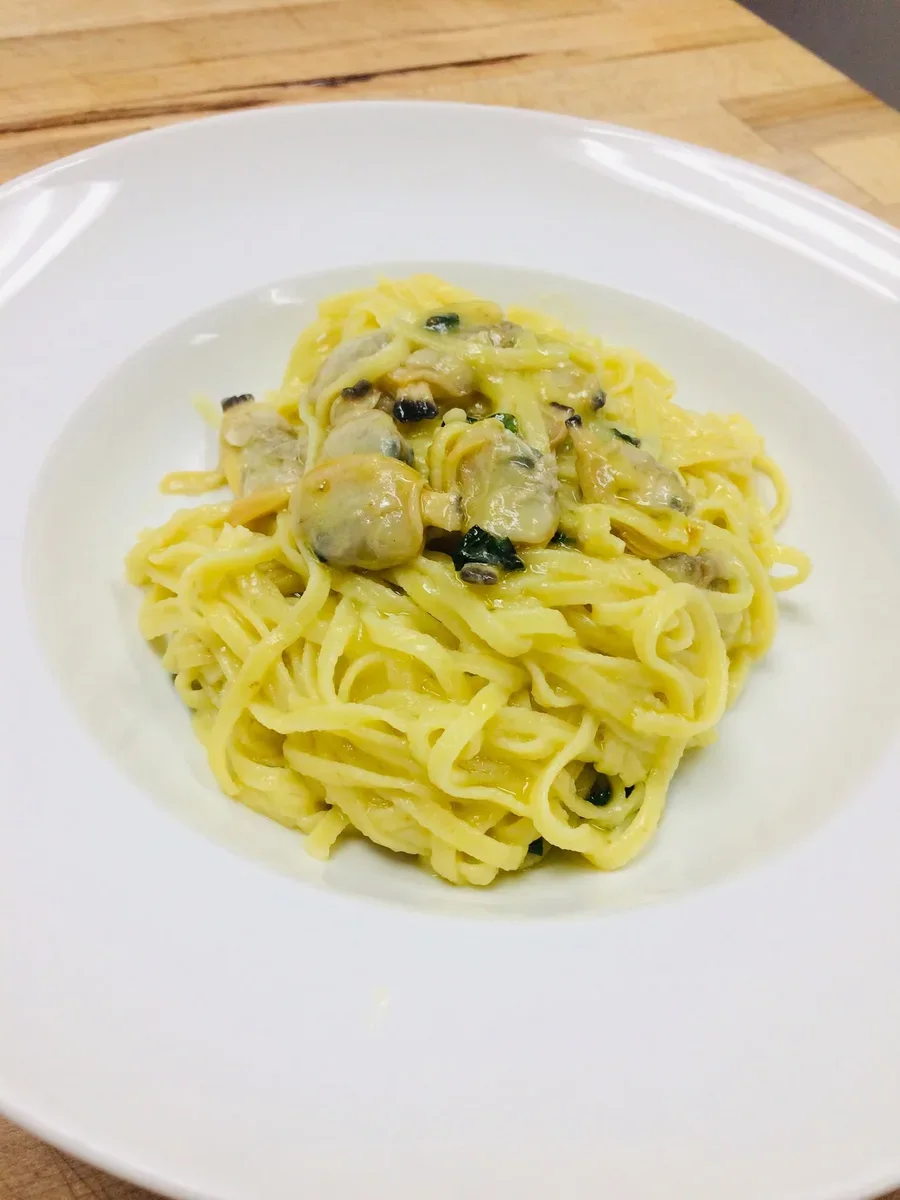
Davanti’s Tagliolini con Crema di Porri e Vongole brings fresh tagliolini together with an emulsion of leeks and extra-virgin olive oil, shelled clams, parsley and garlic. Cervere offers a regional lens on the ingredient; this dish does not claim to use Porro Cervere.
The pairing gives the leeks a clear role. Their mellow sweetness meets the clams’ briny character, while the fine pasta gathers the sauce. Garlic and parsley add a fresher finish. The word crema describes the leek preparation here; the documented ingredients identify an olive-oil emulsion, so the name alone should not be taken to mean a cream-based sauce.
Read more about fresh pasta and Italian olive-oil labels, or explore another distinctive northern vegetable in our radicchio story. The weekend specials and menu show what to look for when visiting Davanti in Houston.
Culinary details reviewed by Oliver Calza, Davanti Co-Founder.